Why Does My AC Drain Line Keep Clogging in South Florida?
South Florida humidity feeds algae in your AC drain line. Learn why clogs happen, safe DIY fixes, and how tune-ups prevent them.
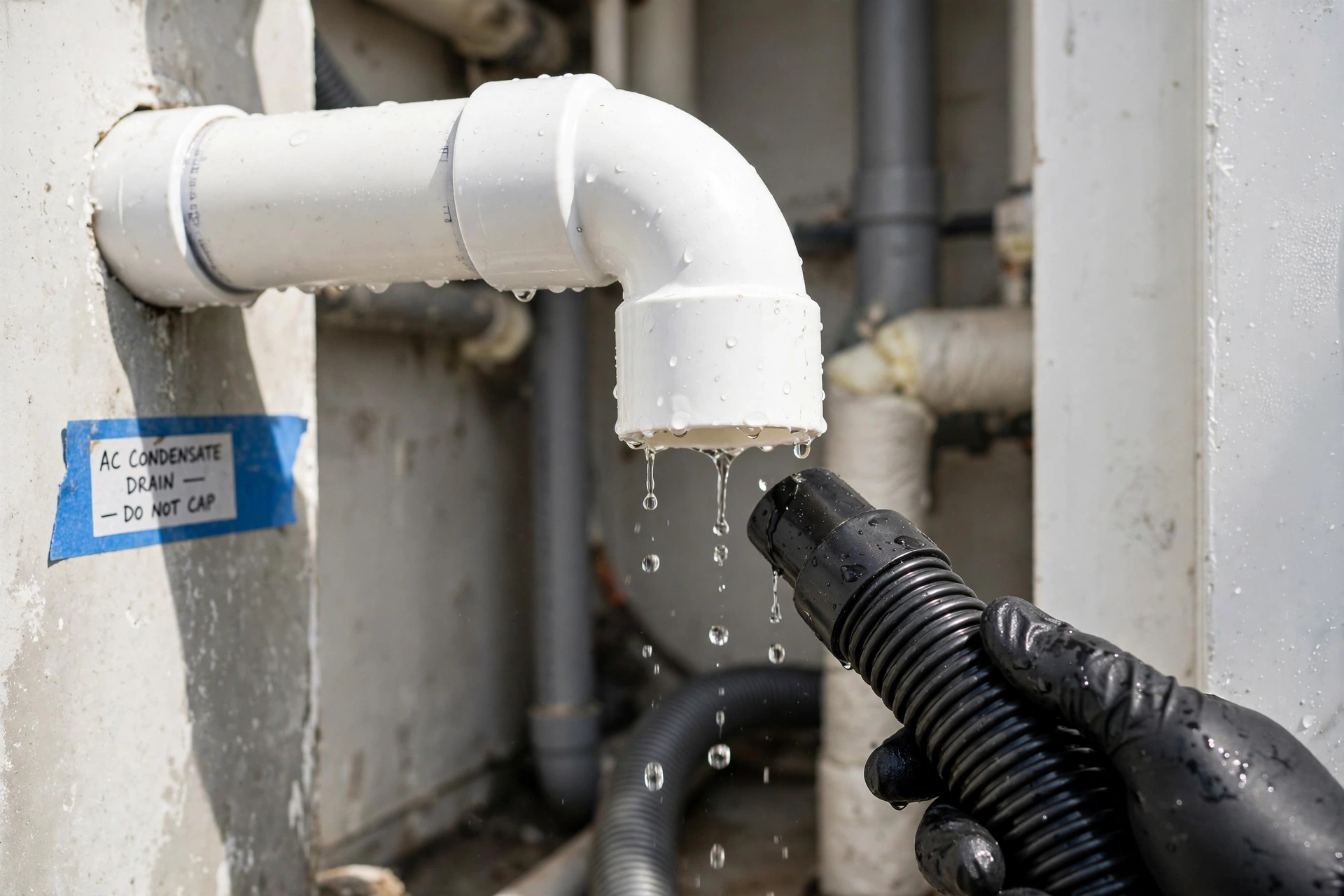
In South Florida, AC drain lines clog because constant humidity and year-round runtime feed algae and biological growth inside the line. When it backs up, a float switch shuts the system off or water leaks near the indoor unit. Regular drain cleaning during a tune-up, and a UV light at the coil, prevent most clogs.
What the Drain Line Does
Your AC pulls gallons of water out of humid Florida air every day. All of it exits through a narrow PVC drain line, usually to the outside of your home or a plumbing drain. It is a simple system with one weakness: warm, dark, constantly wet pipe is the perfect incubator for algae, mold, and slime.
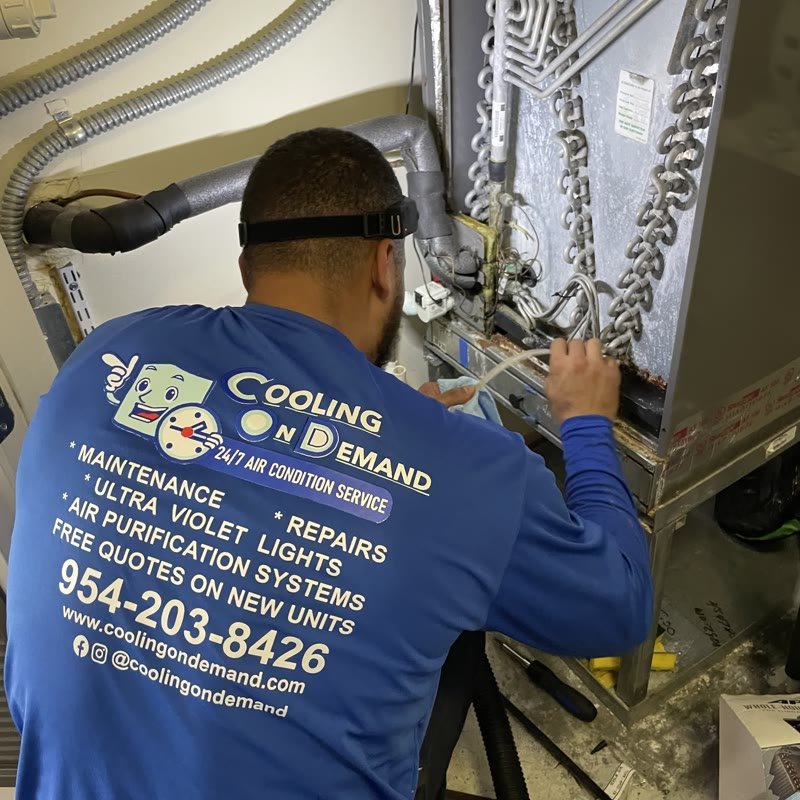
Technician observation: in Broward County, we clear more drain clogs than any other single repair. The pattern peaks in late summer when systems have been running hard for months and the lines are at their dirtiest. Homes with long drain runs or low spots where water sits are repeat offenders.
Signs of a Clog
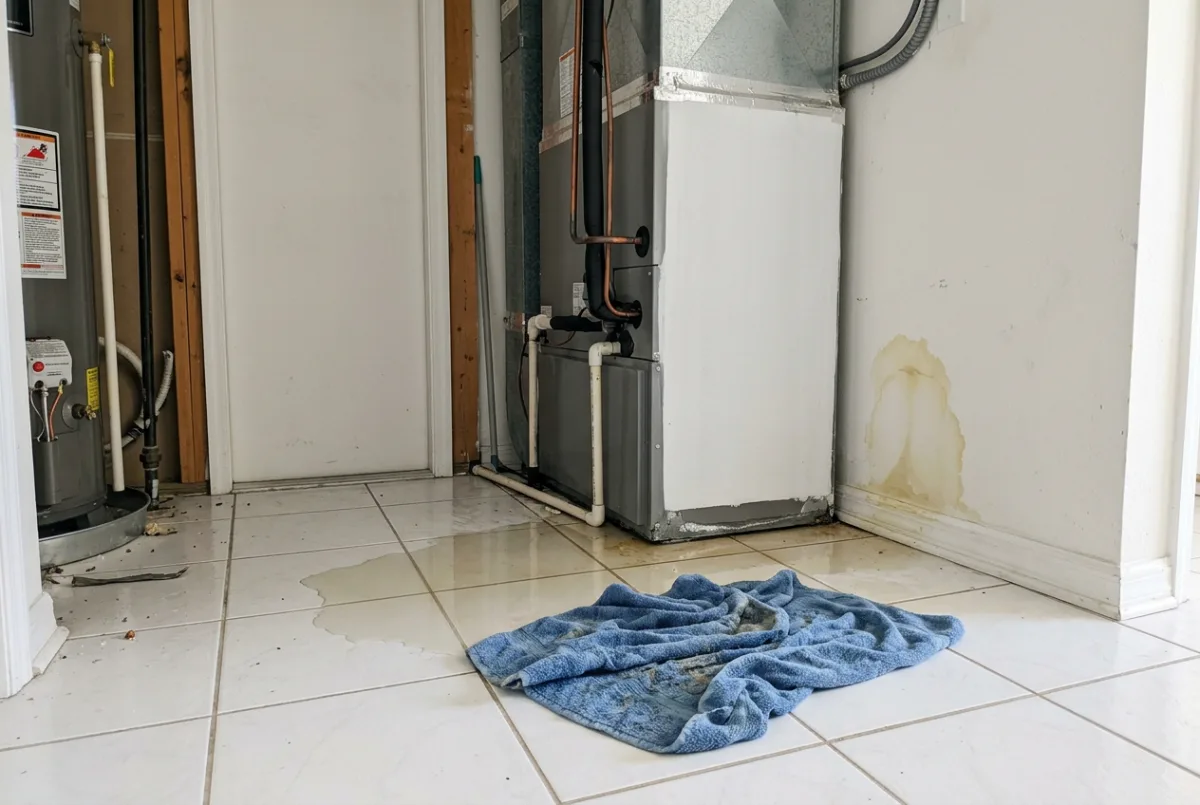
- Water stains on the ceiling or wall near the indoor unit
- Musty smell when the AC runs
- AC shuts off unexpectedly (the float switch doing its job)
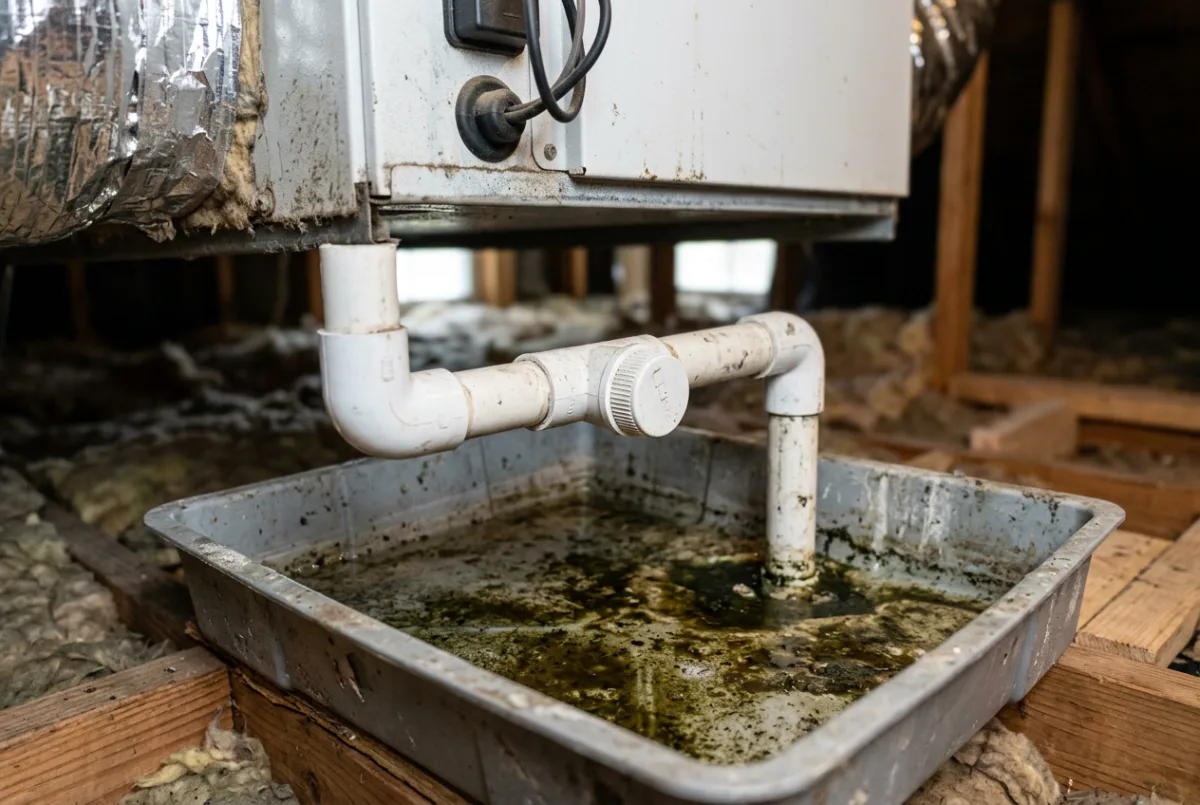
- Standing water in the drain pan
- Gurgling sounds from the line
Safe DIY: What You Can Do
For routine prevention, pour a cup of distilled white vinegar into the drain line access port (usually a T-shaped vent near the indoor unit), let it sit 30 to 60 minutes, then flush with water. Do this monthly during cooling season. Vinegar is mildly acidic, kills algae, and is safe for PVC and copper.
What about bleach? It is a stronger biocide, but it can corrode metal drain pans and coil fins if it backs up, and the fumes are unpleasant. Some contractors advise against bleach entirely. Our take: vinegar for monthly prevention, and call us for anything beyond that. Never mix vinegar and bleach.
For an active clog, a wet/dry vacuum on the outdoor end of the line can pull the blockage out. If water is already leaking into the ceiling, skip the DIY and call us.
When to Call a Pro
- Clogs keep coming back (the line may need rerouting or a deeper clean)
- Water has reached drywall or flooring
- The condensate pump is running constantly or not at all
- You see mold growth around the air handler
How Tune-Ups and UV Lights Prevent Clogs
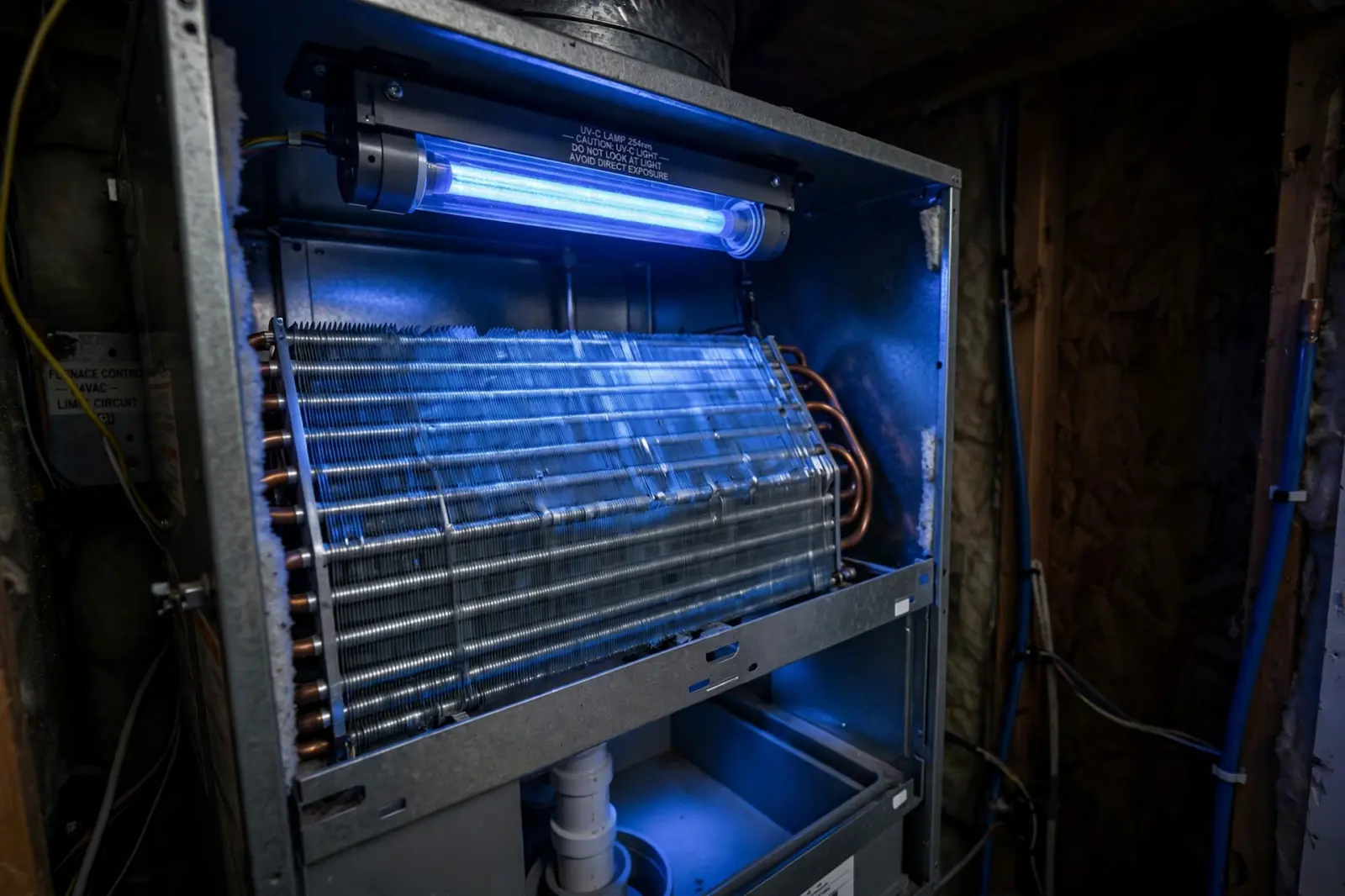
Every tune-up we perform includes drain line and pan cleaning, which is why maintained systems rarely clog. For chronic problems, a UV-C light mounted at the evaporator coil keeps the coil and drain pan free of the biological growth that starts most clogs. It does not replace flushing, but it dramatically slows regrowth between services. Learn how UV lights work.
Frequently Asked Questions
How often should I flush my AC drain line?
Monthly with vinegar during peak cooling season, quarterly at minimum. A professional clearing once a year before summer covers what DIY misses.
Can I use bleach in my AC drain line?
We recommend vinegar for routine use. Bleach is stronger but risks corroding metal components and producing fumes. If you use it, dilute heavily, ventilate, and never mix it with vinegar.
Why does my AC turn off when the drain is clogged?
A float switch in the drain pan detects rising water and shuts off the compressor to prevent flooding. It is a safety feature, not a malfunction. Clear the clog and the system restarts normally.
Will homeowners insurance cover AC water damage?
Standard policies cover sudden and accidental water damage but typically exclude gradual damage from neglected maintenance. A slow drain leak that seeps for months is the classic denied claim. Documented professional maintenance strengthens any claim. The AC unit itself is never covered; that is maintenance.
Need Help With Your AC?
Cooling On Demand is available 24/7 across Broward and Dade County. Licensed, insured, and ready to help.
Book Service OnlineCall (954) 203-8426Keep Reading
Cooling On Demand Inc. is a Florida Certified Air Conditioning Contractor, license #CAC1822848. Services: Drain clearing and AC repair. Read our customer reviews.