Why Does My AC Smell Musty? Causes and Fixes for Broward Homes
A musty AC smell usually means moisture and growth on the coil, drain pan or ducts. Learn the causes, what you can check, and how Broward homeowners fix it.
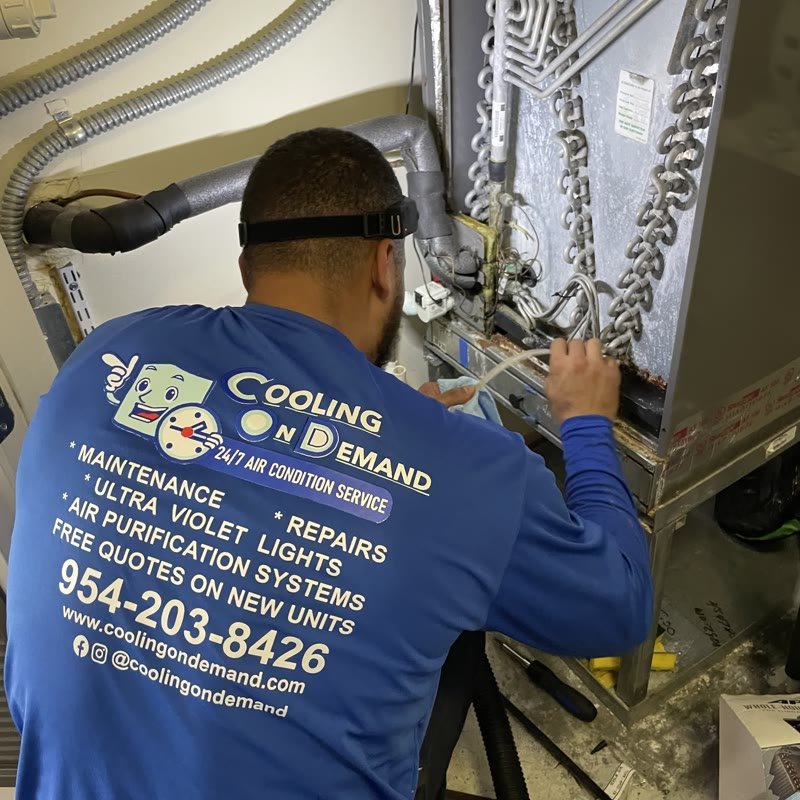
A musty or mildew smell when your air conditioner turns on almost always means moisture is sitting somewhere in the system and something is growing in it. In South Florida, the most common sources are the evaporator coil, the drain pan, a clogged condensate line, or dirty ductwork. The good news: most musty AC smells can be fixed with a professional cleaning, and in many homes a UV light keeps them from coming back.
Why Florida air conditioners are prone to musty smells
Your air conditioner does two jobs: it cools the air and it pulls humidity out of it. In Broward County, that second job is huge. On a typical summer day your system can remove gallons of water from your home’s air. That water collects on the cold evaporator coil, drips into the drain pan, and flows out through the condensate line.
When everything is clean and draining, that is fine. But the coil and pan are dark, damp and full of dust from the air passing through. That is exactly the environment mold, mildew and bacteria love. Once they get a foothold, every time the blower kicks on, it pushes that smell through every vent in the house.
Find The SourceThe 5 most common causes
1. A dirty evaporator coil
Dust and debris that slip past the filter stick to the wet coil and become food for biological growth. This is the number one cause of a musty AC smell we see in Broward homes.
2. Standing water in the drain pan
If the drain pan is cracked, rusted or not draining fully, water sits there between cycles and turns stagnant.
3. A clogged condensate drain line
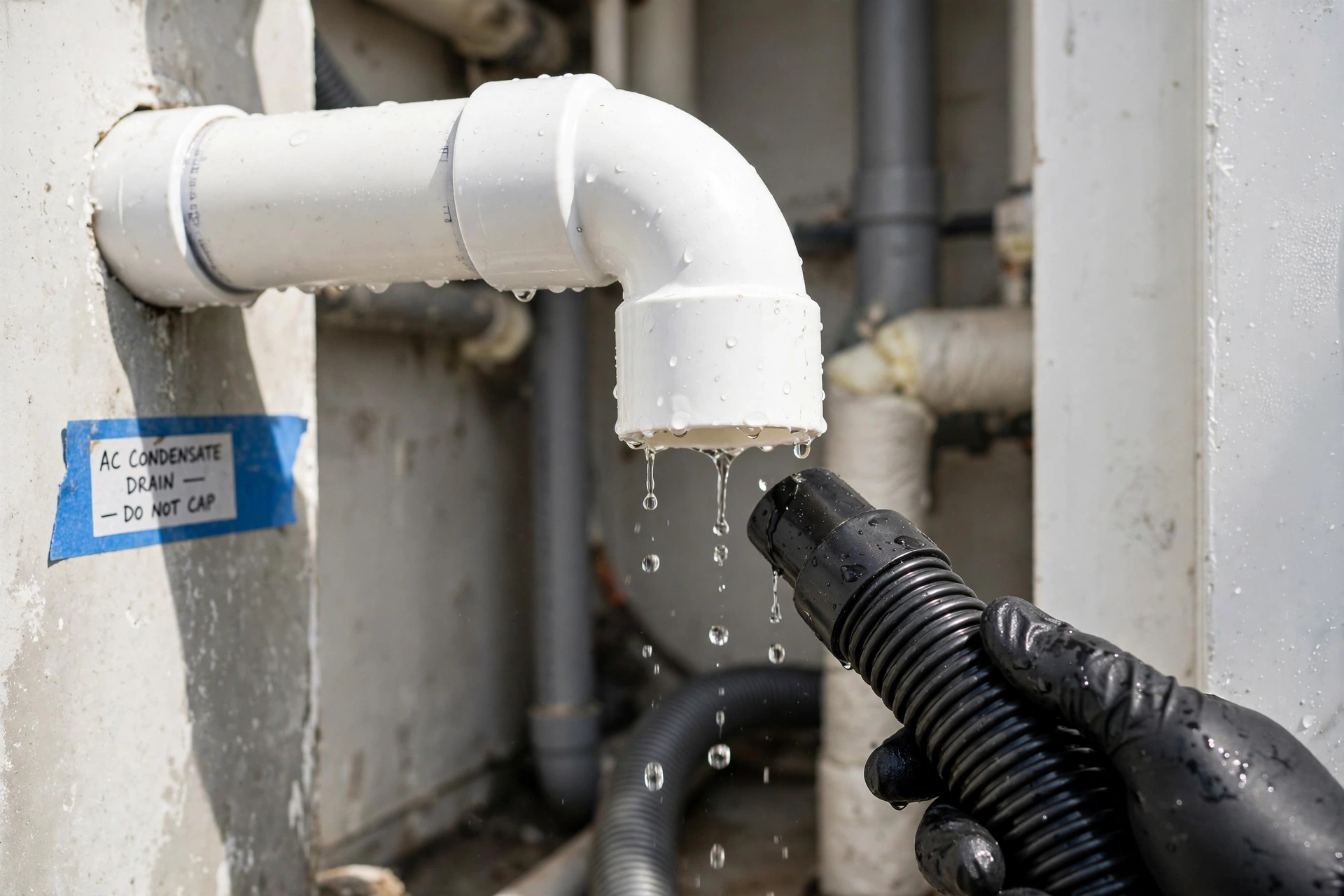
Algae and sludge build up inside the drain line until water backs up. Before it overflows, it often starts to smell. Our post on why AC drain lines keep clogging in South Florida covers this in detail.
4. A dirty or wet air filter
A filter that has not been changed in months can hold moisture and odors of its own.
5. Dirty or leaky ductwork
Ducts that run through a hot, humid attic can collect condensation. Leaky return ducts can also pull in musty air from the attic or wall cavities.
Do It YourselfWhat you can check yourself
Replace the air filter. It is cheap and fast, and it rules out the simplest cause.
Look at the drain pan. If you can safely see under the indoor unit, check for standing water, rust or slime.
Flush the drain line. Pour about a cup of white vinegar into the drain line access.
Notice when the smell happens. A smell only at startup often points to the coil or pan. A smell that lingers all the time can point to ducts or a bigger moisture problem.
Do not spray household cleaners or air fresheners into your vents or onto the coil. They can damage components and only mask the smell.
The Professional FixHow a professional fixes a musty AC smell
When we come out for a musty smell, we look at the whole moisture path, not just one part. A typical visit includes:
- Inspecting and sanitizing the evaporator coil
- Cleaning the drain pan and vacuuming the condensate line
- Checking that water drains fully and the float switch works
- Wiping down the inside of the cabinet to remove buildup
- Checking airflow and refrigerant, since low airflow can make the coil sweat more
These steps are part of our standard AC tune-up, which is why a yearly tune-up is the best prevention.
How to keep the smell from coming back
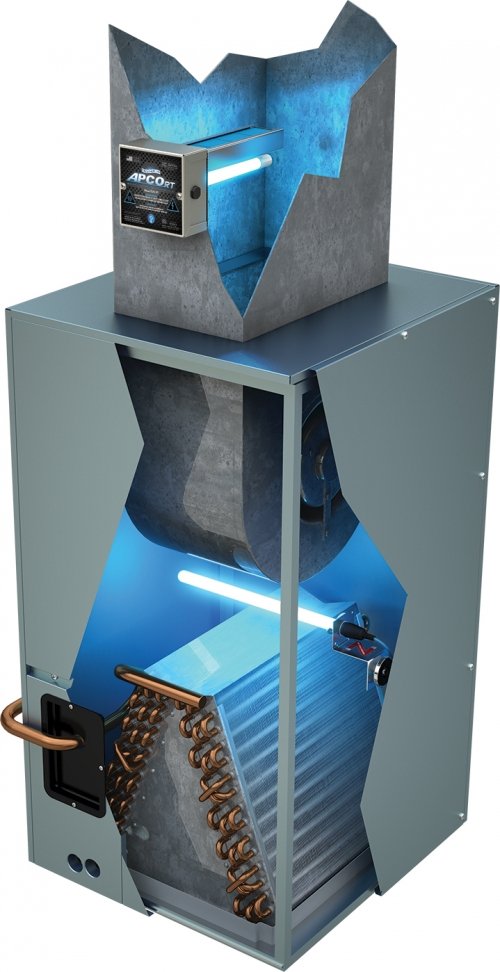
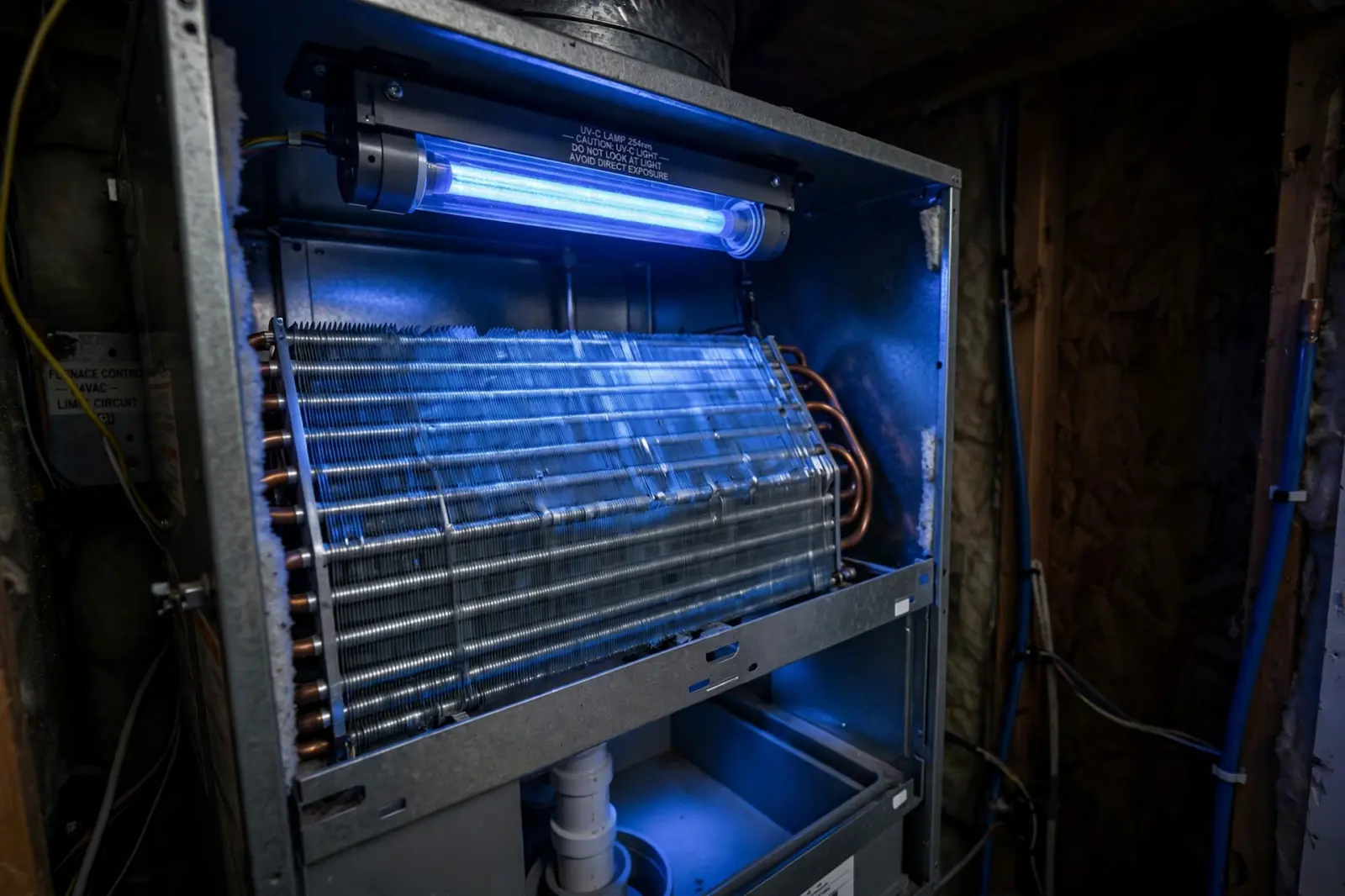
If your home has had musty smells more than once, consider a UV-C light installed near the evaporator coil. It runs continuously and keeps the coil and drain pan from growing the mold and bacteria that cause odors. You can read our honest take on whether UV lights work in AC systems, or learn more about our UV light and air purification service.
Other prevention tips:
- Change your filter every 30 to 90 days
- Keep indoor humidity in check by not setting the thermostat to “fan on” all day, which can re-evaporate moisture from the coil
- Schedule a tune-up at least once a year
When a musty smell is a bigger problem
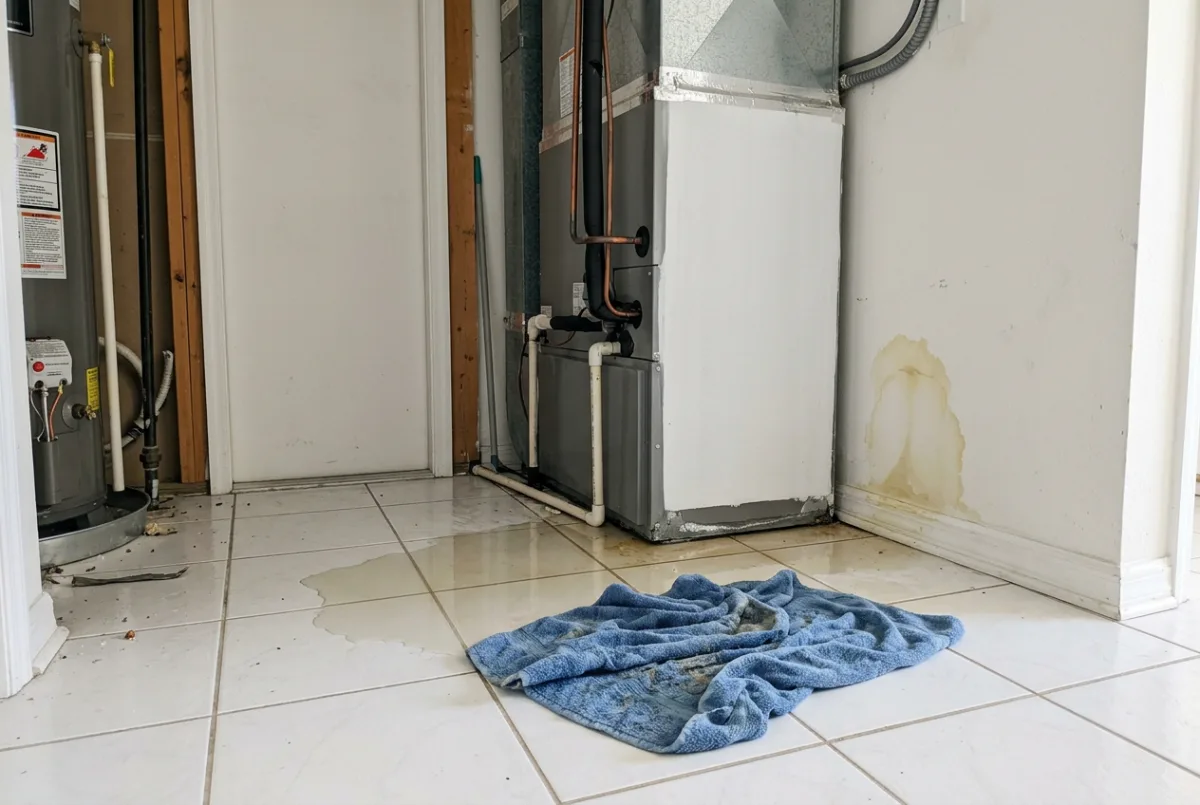
Call a professional promptly if the smell comes with visible mold around vents, water stains on ceilings near the indoor unit, family members with new allergy or breathing symptoms, or water leaking from the unit. These can mean a moisture problem that will keep getting worse.
Frequently Asked Questions
Is a musty AC smell dangerous?
The smell itself is a sign of biological growth. Many people notice allergy symptoms when it is present. It is worth fixing quickly rather than masking it.
Can I spray Lysol into my AC vents?
We do not recommend it. Sprays do not reach the coil or drain pan where the growth starts, and some chemicals can damage components.
Will changing my filter fix a musty smell?
Sometimes, if the filter itself is the source. More often the smell comes from the coil or drain pan, which needs cleaning.
Why does my AC smell like dirty socks?
That “dirty sock” smell is commonly caused by bacteria growing on the evaporator coil. A coil cleaning usually solves it.
Do UV lights stop AC smells?
UV-C lights help prevent the growth that causes musty odors on the coil and drain pan. They work best after the system has been cleaned.
Get Rid of That Musty Smell.
Licensed, local and available 24/7 across Broward County.
Book Service OnlineCall (954) 203-8426Keep Reading
Cooling On Demand Inc. is a Florida Certified Air Conditioning Contractor, license #CAC1822848. Read our customer reviews.