Hurricane Season and Your AC: How to Protect It Before and After a Storm
Turn off the breaker before the storm, skip the plastic tarp, and wait 30 minutes after power returns. Complete hurricane AC protection guide.
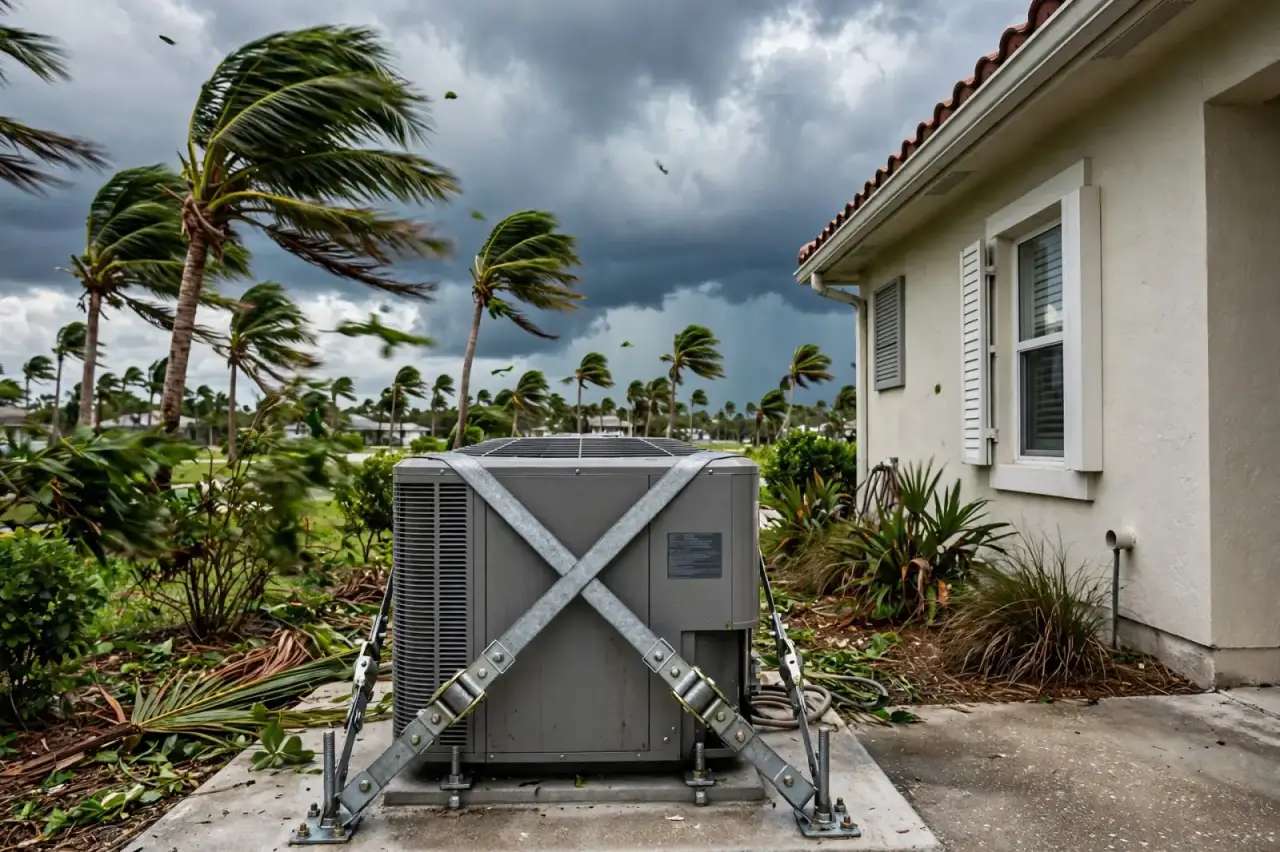
Turn your AC off at the thermostat and switch the breaker off before a hurricane reaches your area, clear debris and projectiles away from the outdoor unit, and do not run the system if it was flooded. After power returns, wait about 30 minutes before restarting, and call a technician if you see water damage, debris in the unit, or the AC will not cool.
Before the Storm: Shut-Down Steps
- Pre-cool the house. About 48 hours before landfall, set the thermostat to 74 to 76 degrees and let the AC run. This pulls humidity out so the home stays comfortable longer after power is lost. Close all blinds and curtains.
- Turn the AC off at the thermostat AND the breaker. The thermostat alone does not disconnect the system from the grid. Shutting the breaker protects against surge damage when power returns unevenly across the neighborhood.
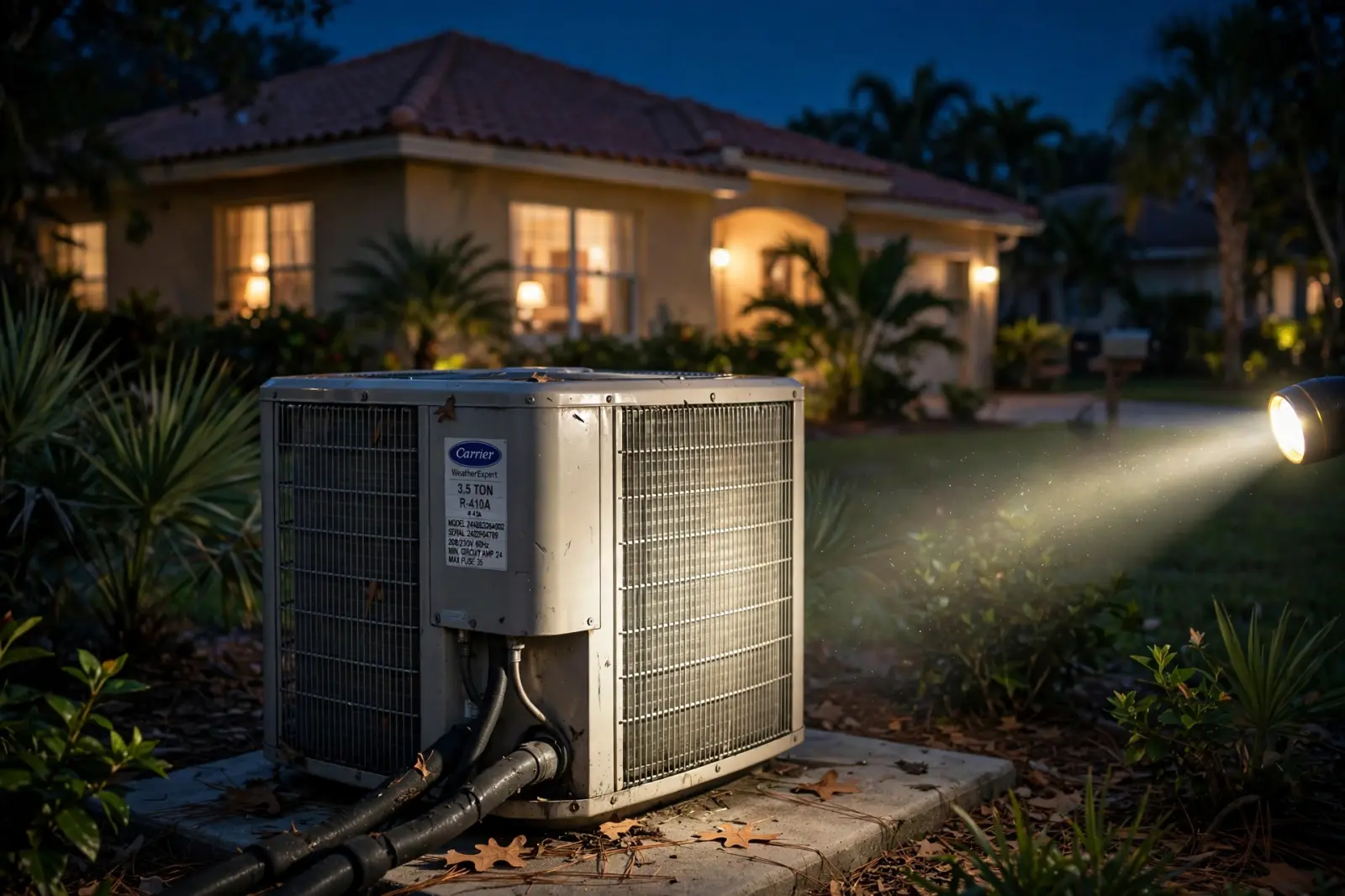
- Clear the area. Move patio furniture, potted plants, and garden tools away from the outdoor unit so wind cannot turn them into projectiles.
- Photograph the system. Document the model number, serial number, and current condition for insurance.
Local tip: Broward homeowners who skip the breaker step are the ones who call us after the storm with fried control boards. It takes ten seconds and saves a service call.
Should You Cover the Outdoor Unit?
Skip the plastic tarp. Tarps trap moisture against the unit, accelerate rust, and if the system accidentally kicks on while covered, the compressor can overheat almost instantly. A breathable waterproof cover or plywood secured with straps can block flying debris, but remove it promptly after the storm. Plastic covers do more harm than good.
After the Storm: Safe Restart
- Wait at least 30 minutes after power returns so the electrical system stabilizes.
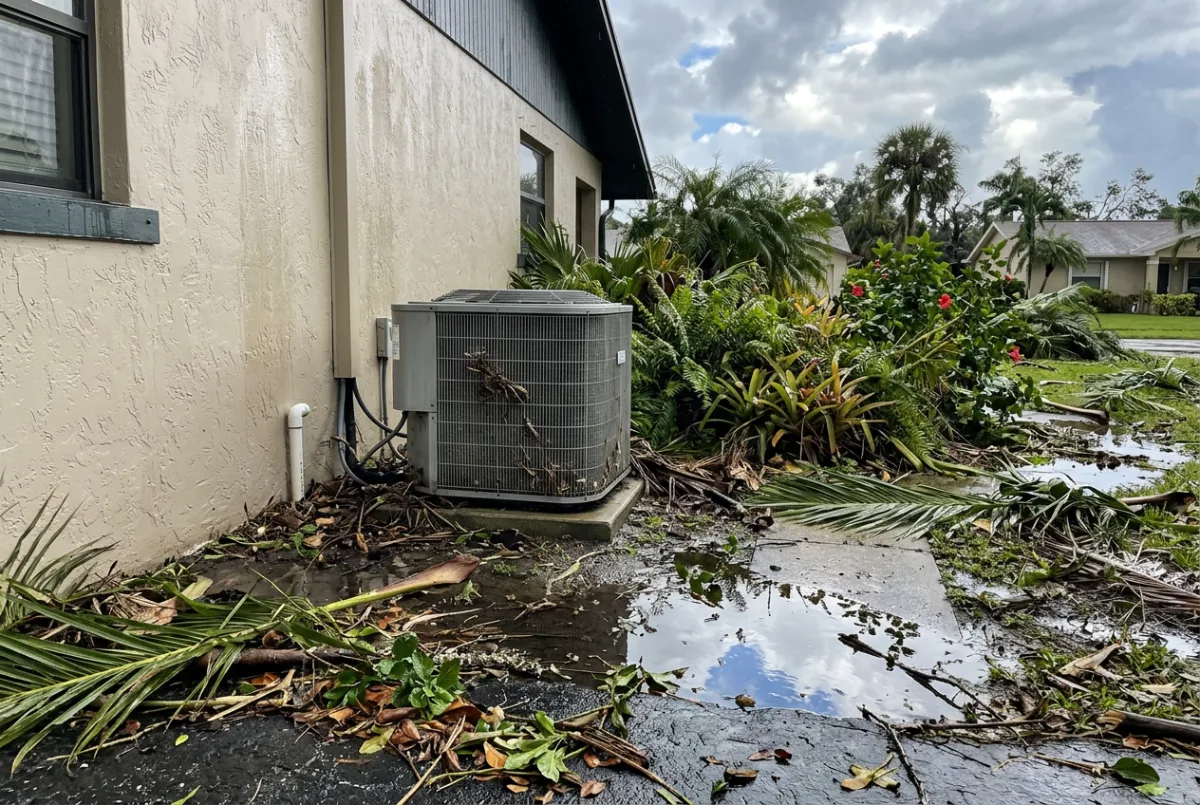
- Remove any cover. Inspect for debris lodged in the unit, standing water, or visible damage.
- Thermostat to OFF, breaker back on, then set the thermostat to cool. Wait at least 3 minutes between off and restart so the compressor does not start against unbalanced pressure.
- If the breaker trips immediately on reset, stop. That signals a serious electrical problem.
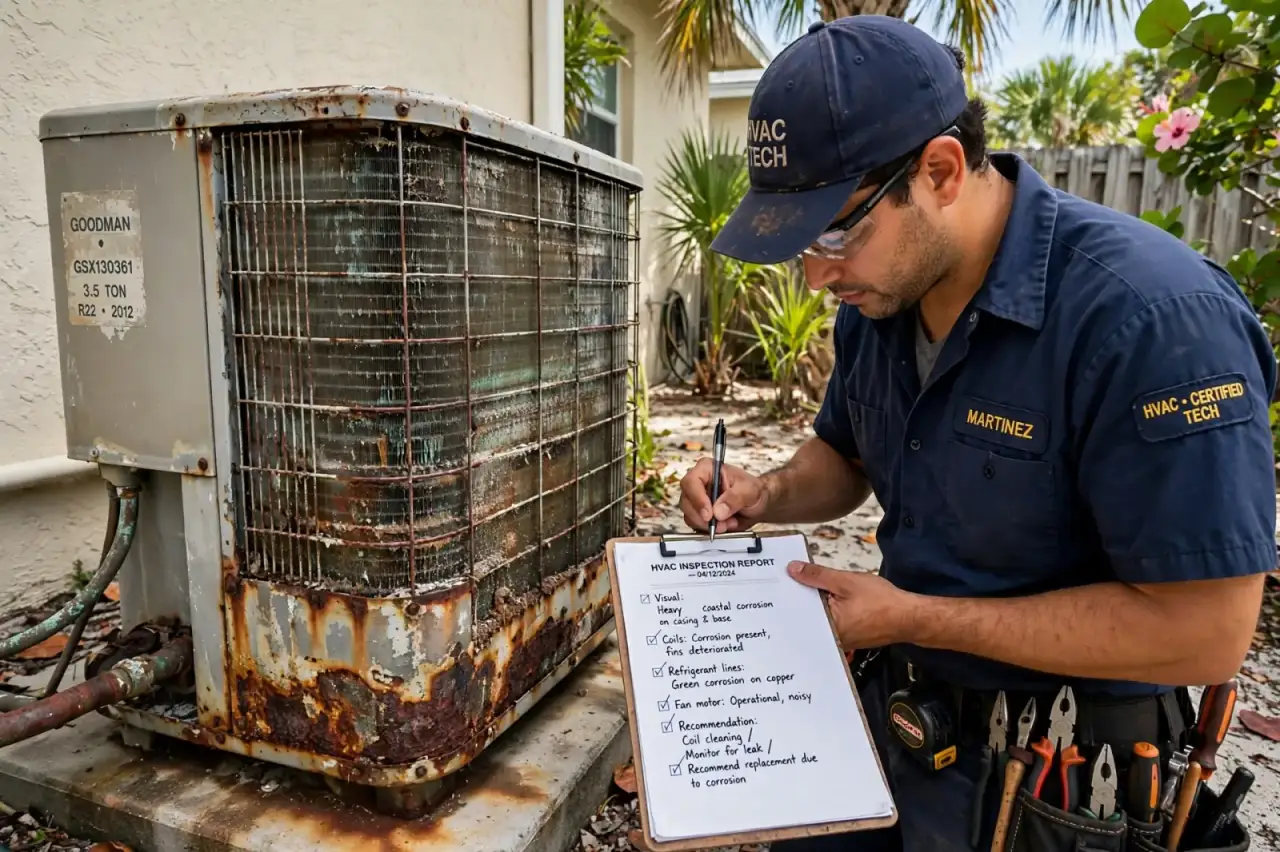
Storm damage is not always visible. If the system struggles to cool, makes loud noises, or shuts down unexpectedly, schedule an inspection.
If the Unit Was Flooded
Shut off power at the breaker immediately and do not touch the unit while standing in water. Do not turn it back on after the water recedes, even if it looks fine. Hidden damage can cause failure weeks later. Per the industry standard (AHRI), flood-damaged heating and cooling equipment should generally be replaced, not repaired, with all work done by qualified contractors. If your system took on water, talk to us about replacement options before spending money on repairs.
Surge Protection and Generators
Modern AC equipment is full of sensitive electronics, which is why a layered approach is recommended: a whole-home surge protector at the panel plus dedicated protection at the outdoor unit. Professional installation typically runs $300 to $600. It will not stop a direct lightning strike (nothing at the panel can), but it handles the far more common nearby-strike and grid surges that fry control boards every storm season. Ask us about surge protection options when you book a visit.
Frequently Asked Questions
Should I cover my outdoor AC unit for a hurricane?
Plastic tarps are discouraged: they trap moisture and can cause the compressor to overheat if the system starts while covered. A breathable cover or secured plywood for debris protection is acceptable if removed promptly after the storm.
Why won’t my AC turn on after a power outage?
Check the breaker first; it may have tripped during the outage or restoration. Wait 30 minutes after power returns before restarting. If the breaker trips immediately on reset, call a technician.
Does a surge protector help my AC?
Yes for the common surges from nearby lightning and grid restoration. It will not stop a direct strike. Layered protection (panel plus outdoor unit) is the recommended approach.
Is storm damage to my AC covered by insurance?
Hurricane, wind, lightning, and falling-tree damage are typically covered perils, minus your deductible. Flood damage is excluded from standard homeowners policies and needs separate flood insurance. Normal wear and tear is never covered.
Need Help With Your AC?
Cooling On Demand is available 24/7 across Broward and Dade County. Licensed, insured, and ready to help.
Book Service OnlineCall (954) 203-8426Keep Reading
Cooling On Demand Inc. is a Florida Certified Air Conditioning Contractor, license #CAC1822848. Services: Storm-season AC repair. Read our customer reviews.