Salt Air and Your AC: Protecting Coastal Fort Lauderdale Systems
Salt air shortens AC life near the coast. Learn how corrosion damages Fort Lauderdale systems, the warning signs, and how to protect your unit.
If you live near the coast in Fort Lauderdale, salt air is quietly working on your air conditioner every day. Salt carried on the ocean breeze settles on the outdoor unit’s coil and metal cabinet, attracts moisture, and speeds up corrosion. Over time that corrosion causes refrigerant leaks, electrical problems and a shorter system life. Regular coil rinsing, protective coatings and the right equipment choices can add years to a coastal system.
How salt air damages your AC
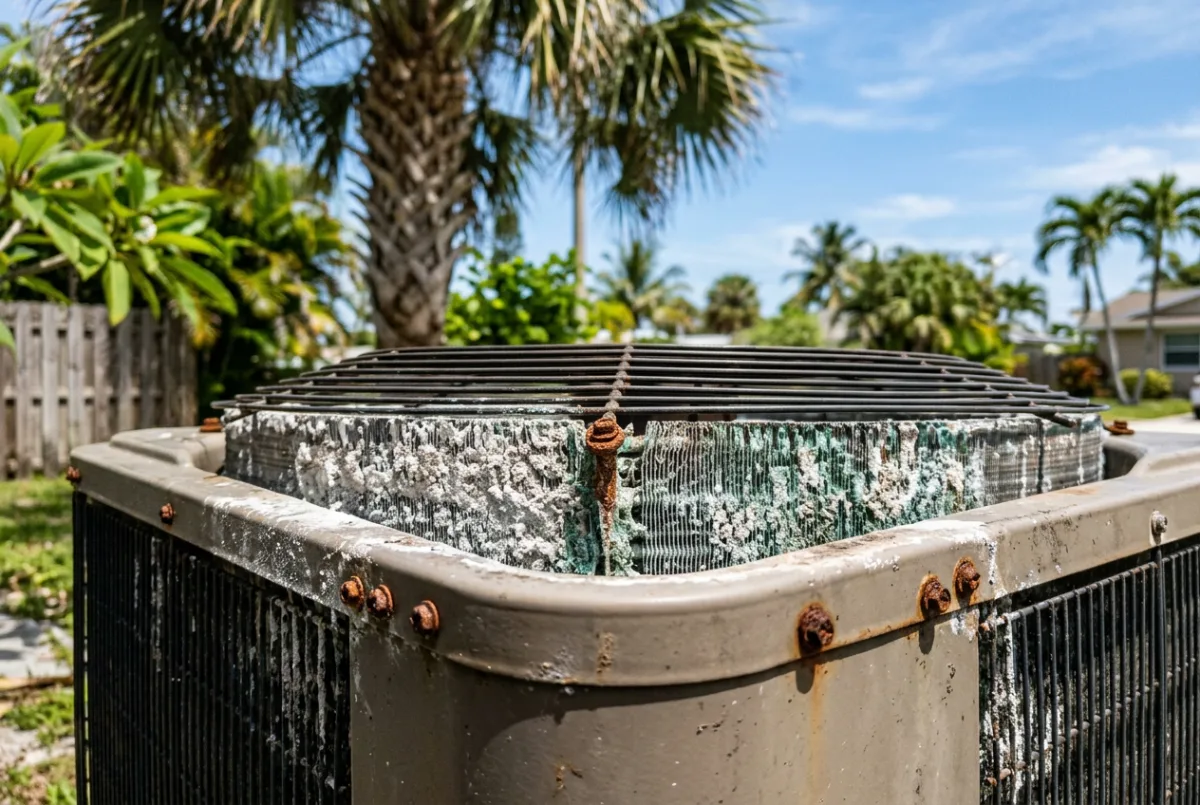
Your outdoor unit’s condenser coil is made of thin copper tubing and aluminum fins designed to release heat quickly. Salt particles that land on the coil hold moisture against the metal. In South Florida’s heat and humidity, that combination speeds up corrosion in two ways:
Fin and coil corrosion. The aluminum fins flake and crumble, blocking airflow and reducing efficiency.
Galvanic corrosion. Where copper and aluminum touch, salt moisture creates a reaction that eats away the metal. This is a common cause of pinhole refrigerant leaks.
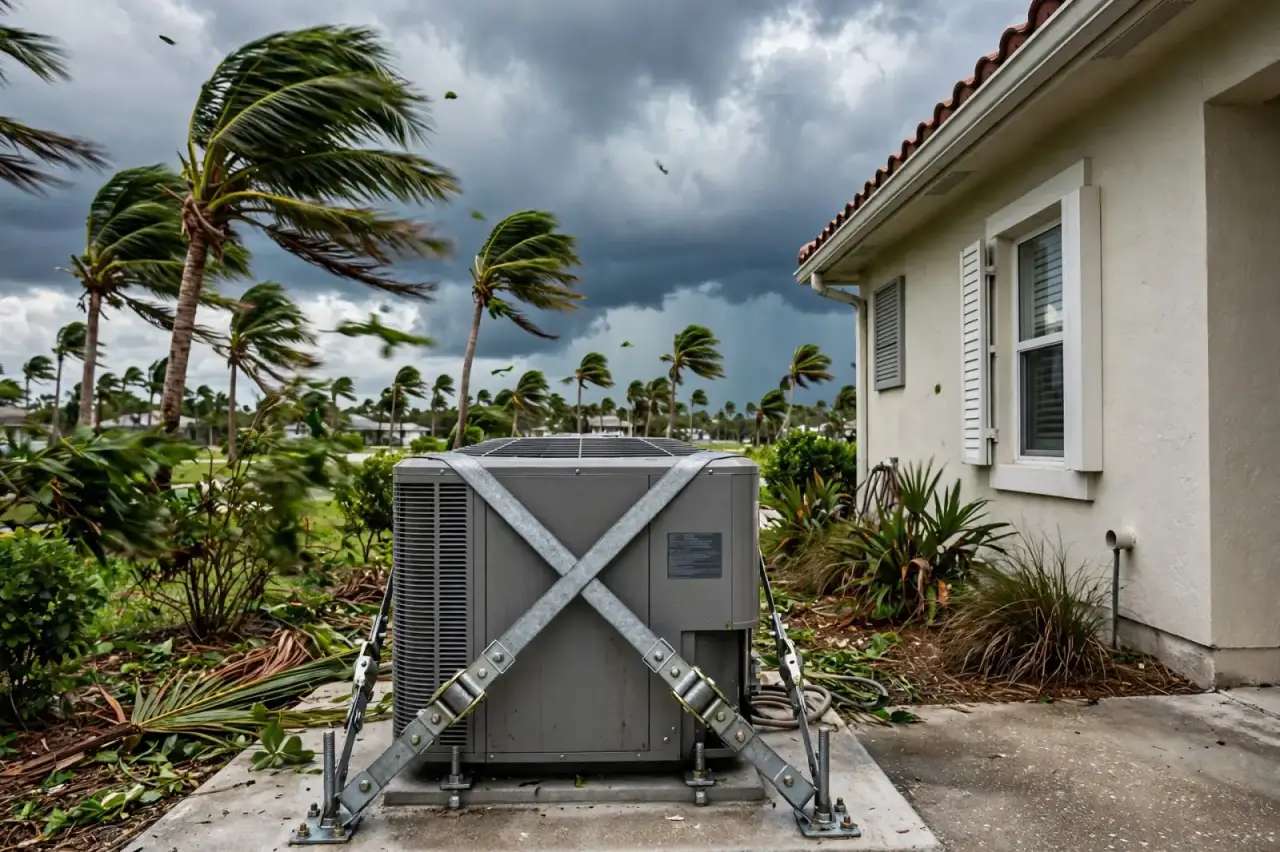
Salt also attacks electrical connections, screws, the cabinet and the unit’s mounting hardware, including hurricane tie-downs.
Who is most at risk?
Homes and condos closest to the ocean and the Intracoastal see the most salt exposure, but coastal breezes carry salt well inland. Units on balconies, rooftops and open, wind-facing sides of buildings get hit hardest. If you can see white crust on your outdoor furniture or car, your AC is getting it too.
Warning signs of salt corrosion
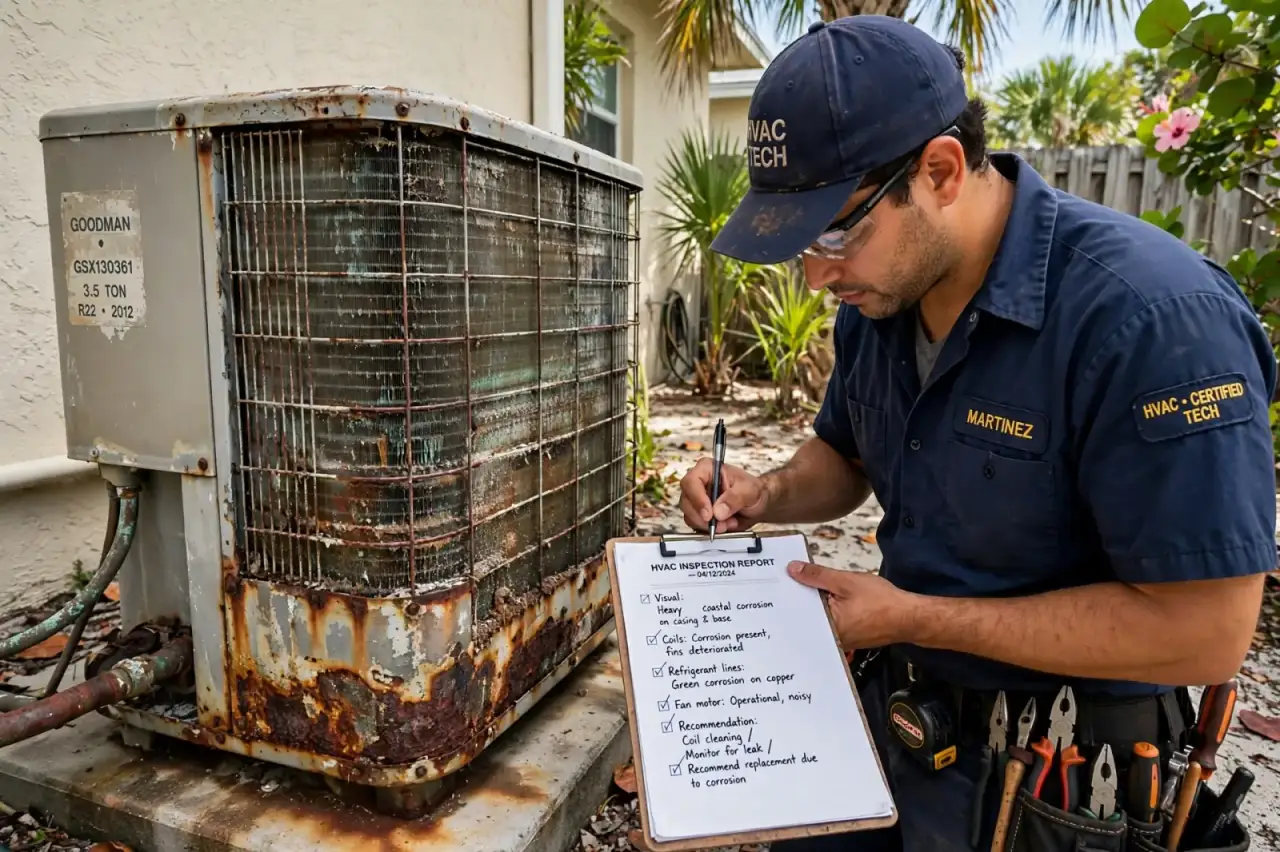
- White, chalky or green crust on the outdoor coil or cabinet
- Fins that crumble or flake when touched
- Rust on the cabinet, screws or tie-downs
- Rising electric bills or longer run times
- Repeated refrigerant leaks
- The system struggling to cool on hot days
How to protect a coastal AC system
Rinse the outdoor coil regularly
A gentle rinse with fresh water washes salt off before it does damage. With power to the unit turned off at the disconnect, spray from the inside out if possible, using a garden hose on a low setting. Never use a pressure washer, which bends fins. Near the coast, a monthly rinse during the cooling season is a common recommendation, plus an extra rinse after any storm that leaves salt spray on the unit.
Schedule maintenance more often
Coastal systems benefit from professional maintenance at least twice a year. Our AC tune-up includes a condenser coil rinse, electrical checks and a refrigerant check, which catches small leaks before they become big ones.
Ask about protective coil coatings
Corrosion-resistant coatings can be applied to new or existing coils to create a barrier against salt. Coatings work best on a clean coil and wear over time, so ask your technician whether one makes sense for how close your home is to the water.
Choose coastal-ready equipment
When it is time to replace, some manufacturers offer coastal or corrosion-resistant models with coated coils and upgraded cabinets. Ask about them during your installation quote.
Check tie-downs and hardware
Hurricane tie-downs and mounting hardware rust faster near the coast. Have them inspected so your unit stays secured in a storm.
LifespanHow long does an AC last near the coast?
Air conditioners in South Florida already work harder than in most places, and salt exposure can shorten their life further. Regular rinsing and maintenance make the biggest difference. Our post on how long an AC lasts in South Florida covers the full picture.
Frequently Asked Questions
How often should I rinse my AC near the beach?
Many coastal homeowners rinse the outdoor coil monthly. Always turn off power at the disconnect first and use gentle water pressure.
Can salt corrosion cause refrigerant leaks?
Yes. Corrosion can create tiny pinhole leaks in the coil, which is one of the most common coastal AC problems.
Are coil coatings worth it?
For systems close to the ocean, protective coatings can help slow corrosion and extend coil life.
Does salt air affect condos and high-rises too?
Yes. Units on balconies and rooftops are often the most exposed.
Should I cover my outdoor unit to protect it from salt?
No. Covers trap moisture against the metal and can make corrosion worse. Rinsing is the better approach.
Coastal AC Service in Fort Lauderdale.
We provide 24/7 AC service across Fort Lauderdale.
Book Service OnlineCall (954) 203-8426Keep Reading
Cooling On Demand Inc. is a Florida Certified Air Conditioning Contractor, license #CAC1822848. Read our customer reviews.