AC Not Working After a Power Outage or Flood? What to Check First
The power is back, but the AC is not. Or water reached your unit. Here is what to check safely, what never to do, and when to call a licensed technician.
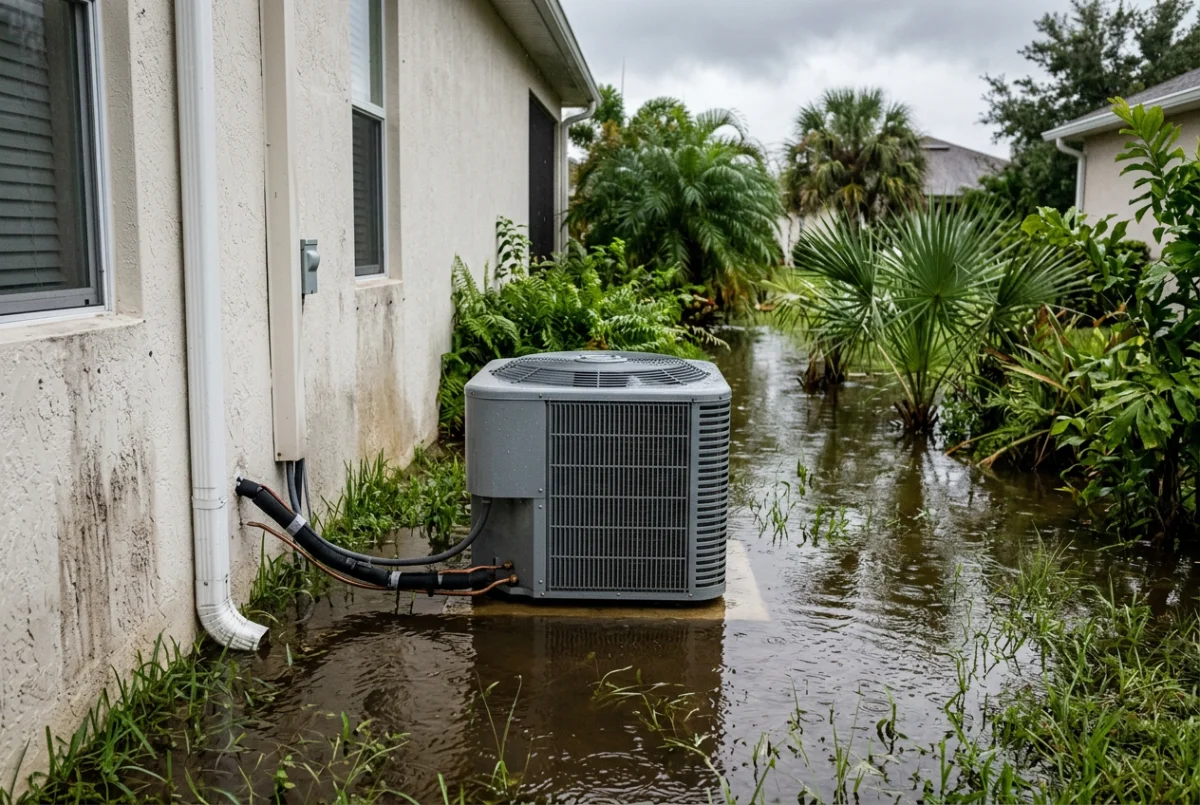
After a power outage, most AC systems need a reset: turn the thermostat off, wait 30 minutes after power returns, reset the AC breaker once, then turn cooling back on and wait 5 minutes. If the AC still will not run, or if floodwater reached the outdoor unit or air handler, leave it off and have it inspected. Running a flooded system can short its electrical parts and ruin the compressor.
The early November 2026 storms dropped more than a foot of rain on parts of Broward County, with Weston and Sunrise among the hardest hit. If your AC quit during a storm or will not come back on, you are not alone. Some fixes take a few minutes. Others need a licensed technician, and knowing the difference protects both your safety and your system.
First: was your AC unit flooded?
If water rose high enough to touch the outdoor condenser, or the indoor air handler in a garage or closet, do not turn the system back on, even if it looks fine once the water drains. Floodwater carries mud, salt and debris into electrical controls, the fan motor and the compressor. A system can run for a few days and then fail, or trip and damage itself the moment it starts.
Safety first. Keep the AC off at the thermostat and at the breaker. Do not touch the unit or the disconnect box while standing in water. The National Weather Service advises making sure the electrical system is off before entering a flood-damaged building.
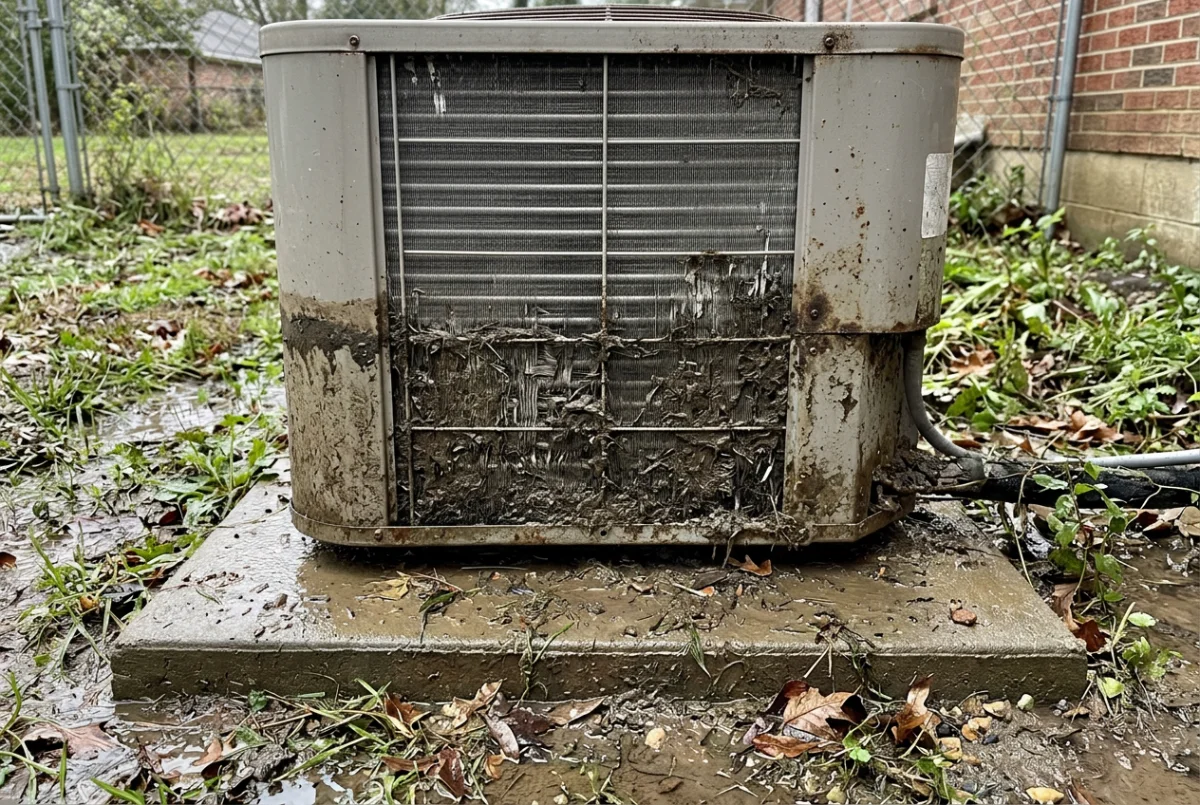
Signs your unit took on water: a mud or debris line on the cabinet, wet insulation or mud inside the air handler closet, rust or white residue on electrical parts, or a burning or musty smell when the system was last on. Book a storm and flood AC inspection before using it again.
How to restart your AC after a power outage
If the unit stayed dry and only lost power, try this reset first:
- Turn the thermostat to OffThis stops the system from trying to start the moment power flickers back.
- Wait about 30 minutes after power returnsPower often surges and drops while the grid stabilizes. Giving it time protects the compressor.
- Reset the AC breaker onceFind the AC breaker in your electrical panel, push it fully to Off, then back to On. If it trips again, stop and call a technician.
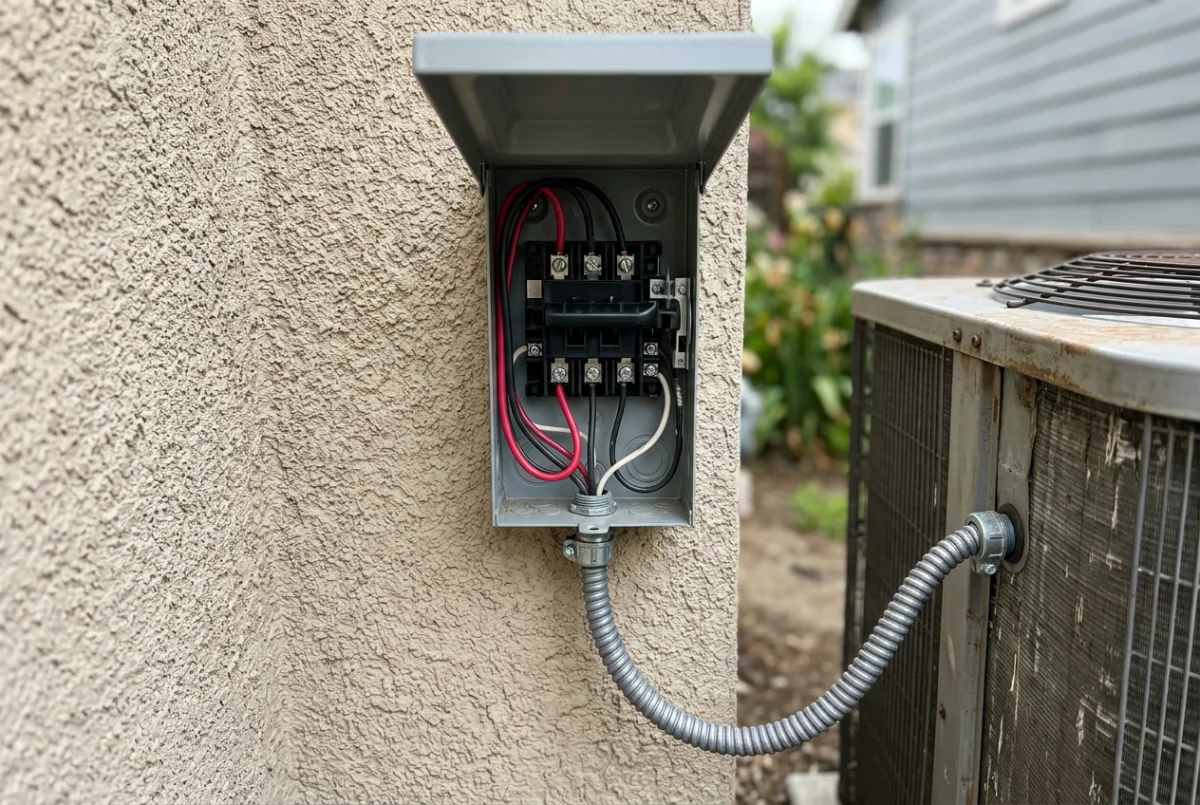
- Check the outdoor disconnectThe disconnect box next to the outdoor unit should be in the On position.
- Turn cooling back on and wait 5 minutesMany systems have a built-in delay before the compressor starts. Then check for cold air at the vents.
Why power outages knock out AC systems
When power drops and returns, especially during storms, the voltage can spike or sag. That puts stress on the parts that start your system. The most common casualties we see after South Florida storms are:
- Tripped breakers from the surge when power came back
- Failed capacitors, the part that gives the motors their starting kick
- Damaged control boards in the air handler or a dead thermostat
- Burned contactors in the outdoor unit
- A blown fuse in the outdoor disconnect
A whole-home or AC surge protector reduces this risk the next time the power goes out. Ask about one during your inspection.
6 things to check before you call
The thermostat
A blank screen often means dead batteries or no power to the air handler. Replace the batteries and check the setting is Cool.
DIY checkThe breaker
Reset it once. A breaker that trips again points to an electrical fault. See why an AC breaker keeps tripping.
DIY checkThe float switch
Heavy rain and high humidity can back up the drain line. A full drain pan shuts the AC off as a safety measure.
DIY checkThe outdoor unit
Look for debris, standing water or a fan that hums but does not spin. Do not run it if it was underwater.
Call a proSmells and sounds
Burning smells, buzzing or clicking with no cooling mean a failed part. Turn it off and call.
Call a proWet indoor equipment
If the air handler sits in a garage or closet that flooded, the blower and controls need inspection before use.
Call a pro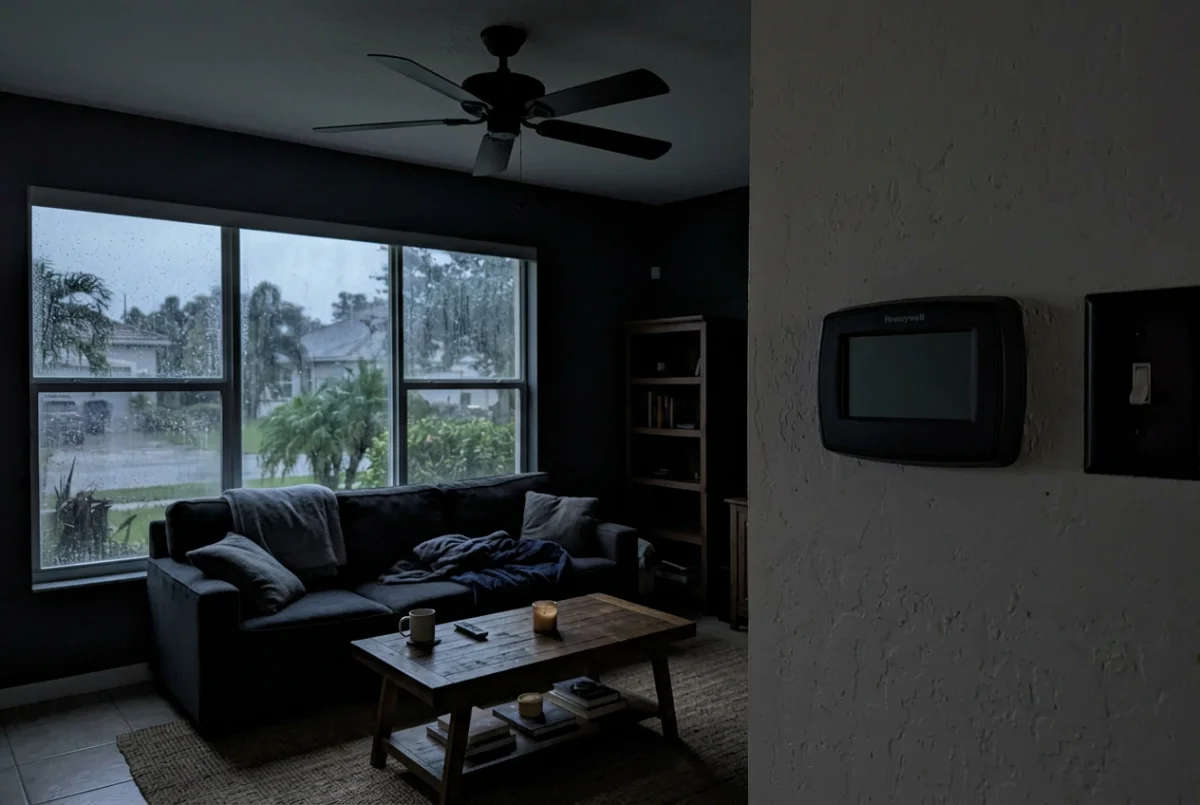
Documenting AC damage for insurance
If the storm damaged your system, good records make a claim easier:
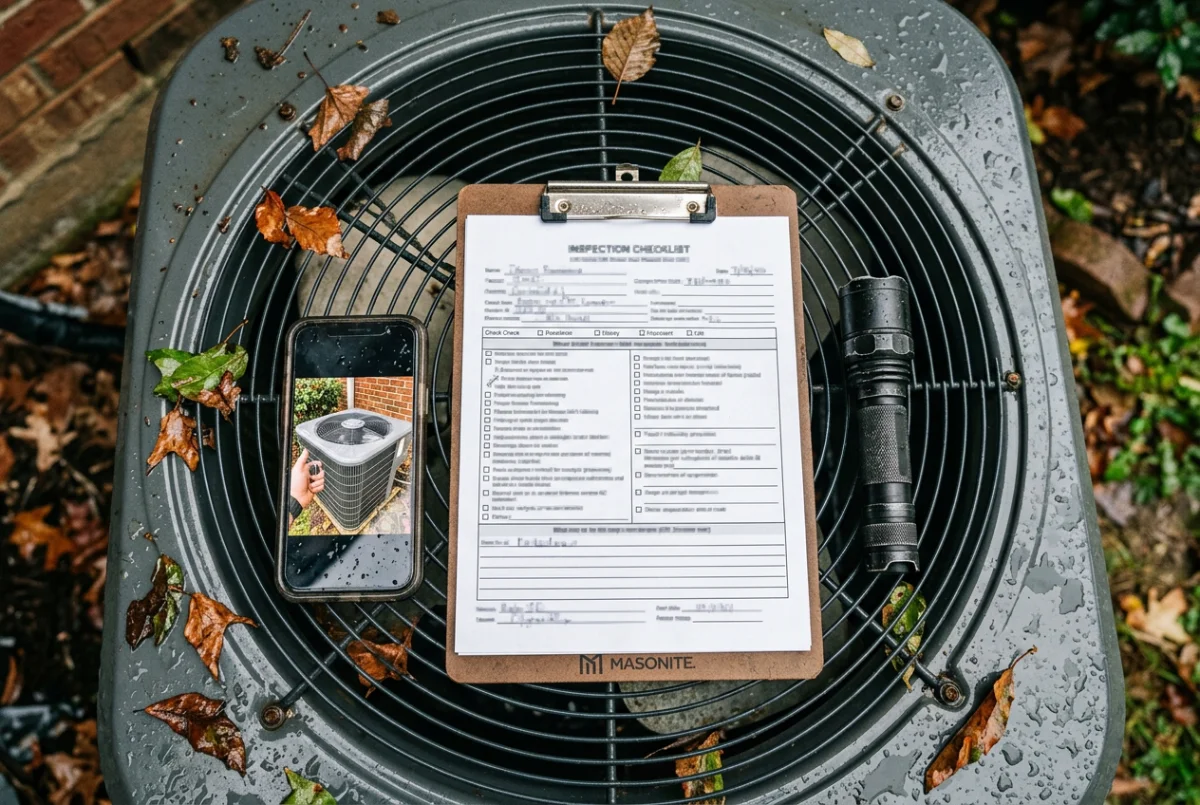
- Photograph the water line on the unit and the area around it before cleanup
- Write down the date the power went out and when it came back
- Keep receipts for any emergency repairs or temporary cooling
- Get a written inspection report from a licensed contractor
Our storm inspections include photos and a written report you can share with your insurance company. Keep in mind that standard homeowners policies usually exclude flood damage, which is covered by separate flood insurance. FloodSmart.gov explains how flood coverage works, and the Florida Department of Financial Services runs a free insurance consumer helpline at 1-877-MY-FL-CFO.
When to call a professional
Call a licensed technician if the unit was flooded, the breaker trips again, you smell burning, or the system runs but will not cool after a reset. Our AC repair team is available 24/7 across Weston, Sunrise, Davie, Plantation and the rest of Broward County. For more storm tips, read our hurricane prep guide for your AC.
Frequently Asked Questions
Why won’t my AC turn on after the power came back?
The most common reasons are a tripped breaker, a thermostat that lost power or needs new batteries, a blown fuse in the outdoor disconnect, or a capacitor that failed when the power surged. Try the reset steps above, and call a technician if it still will not start.
How long should I wait to turn my AC on after a power outage?
Wait about 30 minutes after power is restored so the grid can stabilize, then turn the thermostat back to Cool. Many systems also have a built-in delay of a few minutes before the compressor starts.
Can I run my AC if the outdoor unit was flooded?
No. Keep it off at the thermostat and breaker until a licensed technician inspects it. Water and mud in the electrical parts or compressor can cause failure or a safety hazard.
Does homeowners insurance cover a flooded AC unit?
Standard homeowners policies usually exclude flood damage, which is covered by separate flood insurance. Wind, lightning or power surge damage may be covered depending on your policy. Check with your insurer, and keep photos and a written inspection report.
Will a surge protector protect my AC?
A surge protector for your AC or whole home reduces damage from the voltage spikes that happen when power drops and returns. It cannot stop a direct lightning strike, but it handles the far more common grid surges.
AC Down After the Storm?
Call any time, day or night. We will check it safely and get you cooling again.
Book Service OnlineCall (954) 203-8426Keep Reading
Cooling On Demand Inc. is a Florida Certified Air Conditioning Contractor, license #CAC1822848. Read our customer reviews.