Open 24 Hours, Every Day (954) 203-8426  |  Book in the TopTec app

Category: AC Tips

  • AC Leaking Water Inside? Causes and Fixes

    AC Leaking Water Inside? Causes and Fixes

    Home / Blog / AC Troubleshooting
    AC Troubleshooting

    AC Leaking Water Inside? Common Causes and How to Fix Them

    Water around the indoor unit or a stain on the ceiling is usually a drainage problem, not a broken AC. Here is how to find it and stop it fast.
    By Cooling On Demand Inc.FL License #CAC18228486 min read
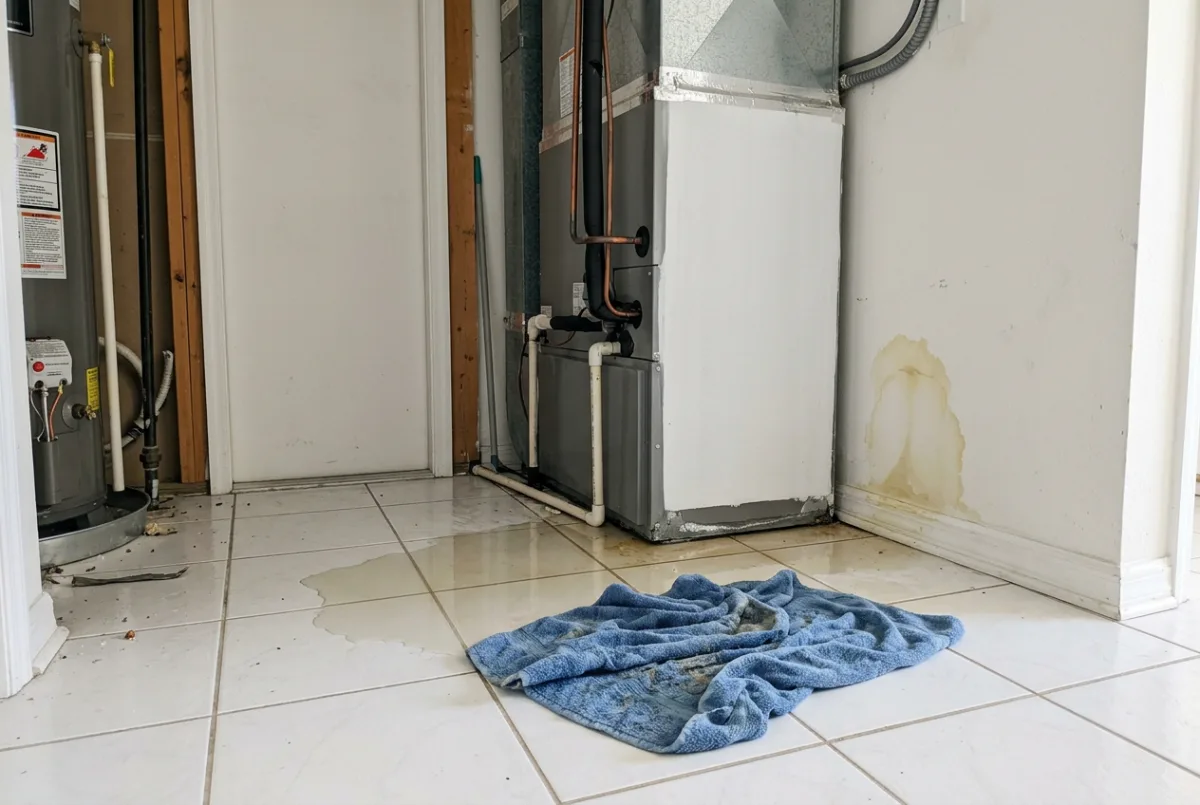
    Water puddle on tile floor in front of an indoor AC air handler in a utility closet
    Water pooling in front of a closet air handler is a classic sign of a backed-up condensate drain.
    Quick answer

    Most indoor AC leaks in South Florida come from a clogged condensate drain line. Algae and sludge block the line, the drain pan fills, and water spills over. Other causes are a frozen coil melting, a rusted or cracked drain pan, a loose drain line or a failed float switch. Turn the system off, contain the water, and check the drain pan.

    Finding water around your indoor air conditioner, or a stain spreading across the ceiling below it, is stressful. The good news is the AC itself is rarely broken. It is the water your system pulls out of the air every day not draining the way it should.

    Why your AC makes water in the first place

    Your air conditioner cools the air and removes humidity at the same time. As warm, humid air passes over the cold evaporator coil, moisture condenses, drips into a drain pan and flows out through the condensate line, usually to the outside of your home. In a humid place like Broward County, a working system can remove gallons of water a day. When anything interrupts that path, the water ends up where you do not want it.

    What to do right now

    1. Turn the system offShut it off at the thermostat to stop more water from forming.
    2. Contain the waterUse towels or a bucket, and move anything that could be damaged.
    3. Check the drain panIf you can reach it safely and it is full of water, the drain line is almost certainly clogged.
    4. Look for iceIce on the coil or copper lines means a frozen coil. Leave cooling off and set the fan to On so it can thaw.
    5. Check the filterA clogged filter can freeze the coil, and a frozen coil leaks as it melts.

    Water near electrical parts? If water is pooling around the air handler’s wiring or an outlet, switch the system off at the breaker before you start cleaning up.

    6 common causes of an AC leaking water inside

    1

    Clogged condensate drain line

    The number one cause in Florida. The warm, wet line is perfect for algae and sludge. Once it clogs, the pan overflows.

    Often DIY
    2

    Frozen evaporator coil

    When the ice melts, it can release water faster than the pan can drain. Learn why an AC freezes up.

    Call a pro
    3

    Rusted or cracked drain pan

    Older metal pans rust through and plastic pans crack. Water drips straight through instead of draining.

    Call a pro
    4

    Loose or poorly sloped drain line

    A disconnected joint or a line without enough downward slope can back up and leak before water leaves the house.

    Call a pro
    5

    Failed float switch

    This switch should shut the AC off when water backs up. If it fails or was never installed, the pan just overflows.

    Call a pro
    6

    Dirty air filter

    It does not leak by itself, but it is a top reason coils freeze, and a frozen coil leaks when it thaws.

    DIY fix
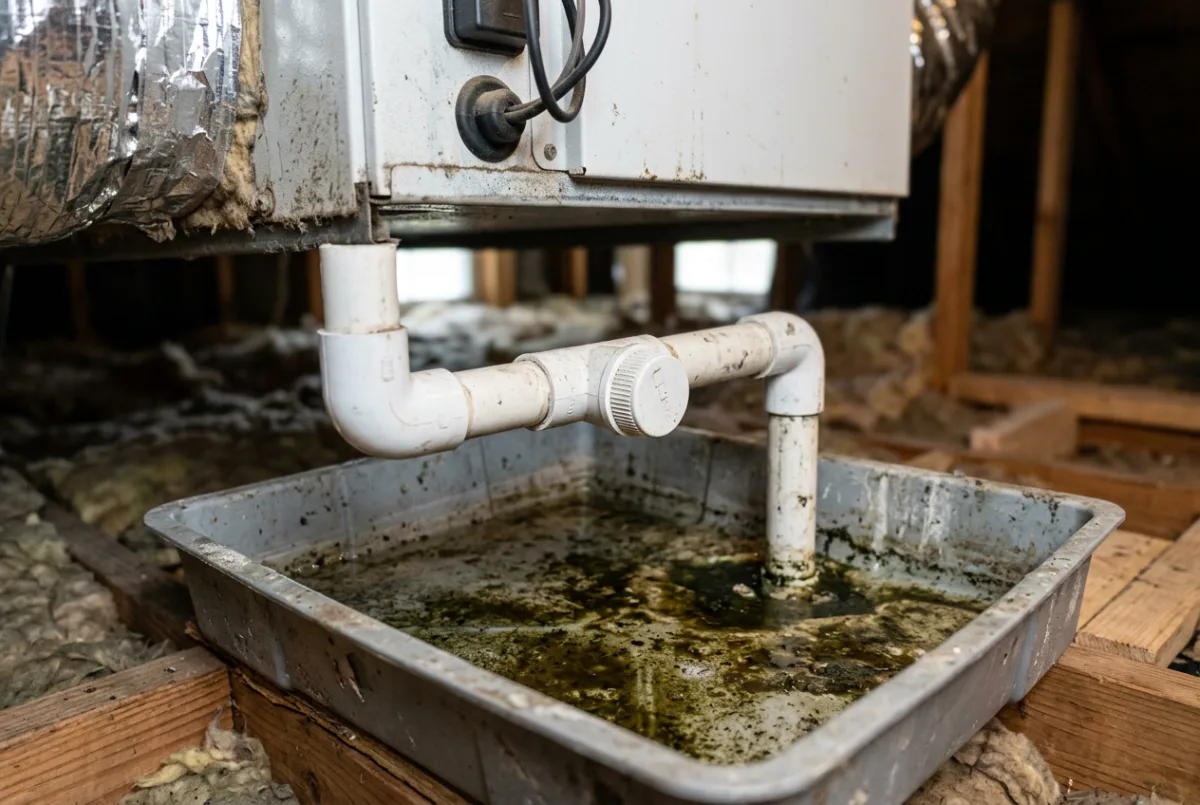
    AC secondary drain pan full of water and algae under a PVC condensate drain line
    Standing water and algae in a drain pan mean the condensate line is not draining.

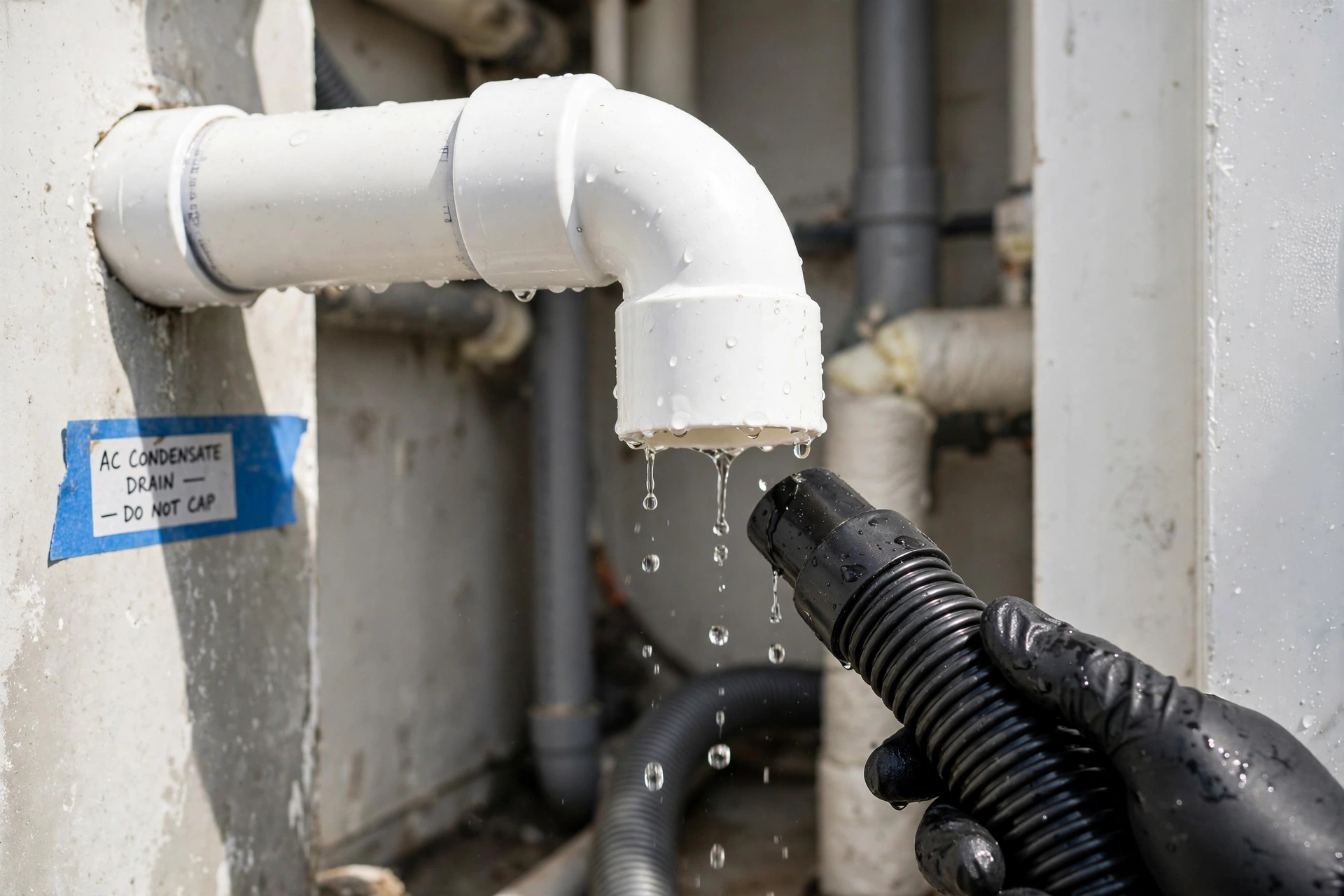
    Easy prevention: pour about a cup of white vinegar into the drain line access (usually a capped PVC tee near the indoor unit) every month or two. If the line is already blocked, it usually needs to be vacuumed out. Our post on why AC drain lines clog in South Florida covers this in detail.

    Why closet and attic air handlers need extra protection

    In many South Florida homes the air handler sits in a closet, a garage or the attic, right above finished ceilings. That is why the Florida Building Code calls for safeguards on many installations, such as an auxiliary drain pan with its own drain line under units where overflow could cause damage, and a device that shuts the unit down or alerts you when the main drain stops working. You can find the current code through the Florida Building Commission. If your system is older or you are not sure these safeguards are in place, ask your technician to check on the next visit.

    DIY or call a pro?

    What you noticeLikely causeWho fixes it
    Drain pan full, line slow to drainPartial clogYou: vinegar flush, then watch it
    Water keeps coming back after flushingHard clog in the lineTechnician: vacuum the line
    Ice on the coil or copper linesFrozen coilYou: thaw and change the filter; tech if it refreezes
    Rust holes or cracks in the panFailed drain panLicensed technician
    Stain spreading on the ceilingOverflow from an attic unitLicensed technician, right away

    How to prevent your AC from leaking

    • Flush the condensate line with white vinegar every month or two
    • Change your air filter every 30 to 90 days
    • Make sure your float switch works, and ask about one if you do not have it
    • Schedule a yearly AC tune-up, which includes cleaning the drain line and drain pan

    Can an AC leak cause mold?

    Yes. Standing water in closets, ceilings or attics can lead to mold quickly in South Florida humidity. EPA guidance on water damage calls for drying wet materials within 24 to 48 hours to help avoid mold growth, so fix leaks promptly and dry the area thoroughly. If your AC already smells off, see why your AC smells musty.

    When to call a professional

    Call a licensed technician if water keeps coming back after you clear the drain, if the drain pan is rusted or cracked, if you see ice on the coil, or if there is any sign of water damage in your ceiling or walls. Our AC repair team is available 24/7 across Sunrise, Plantation, Fort Lauderdale, Davie and the rest of Broward County.

    Good to know

    Frequently Asked Questions

    Is it normal for my AC to drip water?

    It is normal for water to drip outside from the condensate line. It is not normal for water to leak inside around the indoor unit, from vents or through the ceiling.

    Can I keep running my AC if it is leaking water inside?

    It is best to turn it off until you find the cause. Running it can cause more water damage, and if the coil is frozen, it can damage the compressor.

    How do I unclog my AC drain line?

    Pour about a cup of white vinegar into the drain line access, usually a capped PVC tee near the indoor unit. If water is already backing up, the line likely needs to be vacuumed out by a technician.

    Why is water coming from my AC vents?

    Water at the vents is often condensation forming on cold ductwork or vents in a humid home, or a sign of poorly insulated ducts. It is worth having checked.

    Can an AC leak cause mold?

    Yes. Standing water in closets, ceilings or attics can lead to mold quickly in South Florida humidity, so leaks should be fixed and dried promptly.

    Water Leaking From Your AC?

    Call any time, day or night. We will find the source and stop the leak.

    Book Service OnlineCall (954) 203-8426

    Cooling On Demand Inc. is a Florida Certified Air Conditioning Contractor, license #CAC1822848. Read our customer reviews.
  • Why Is My AC Freezing Up? Causes and Fixes

    Why Is My AC Freezing Up? Causes and Fixes

    Home / Blog / AC Troubleshooting
    AC Troubleshooting

    Why Is My AC Freezing Up? Causes, Fixes and What to Do Right Now

    Ice on your coil or copper lines in the middle of a Florida summer? Here is why it happens, how to thaw it safely, and when it needs a pro.

    By Cooling On Demand Inc.FL License #CAC18228487 min read
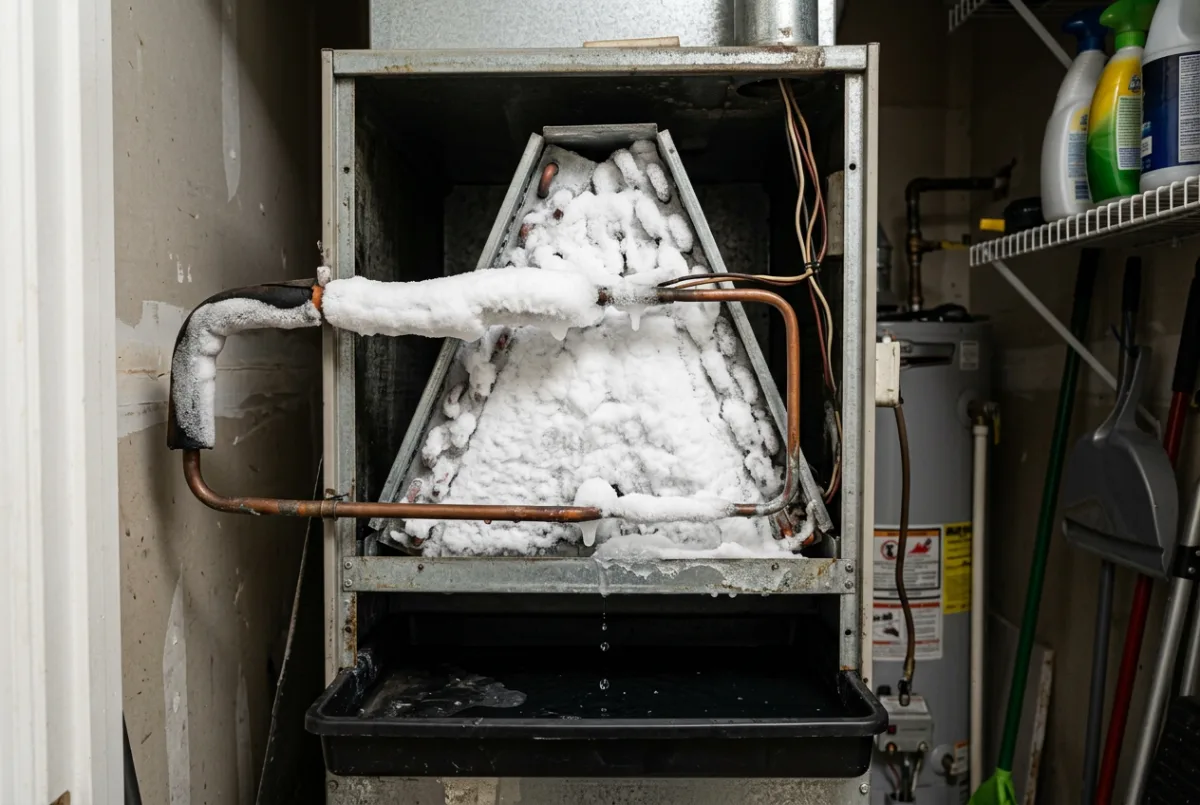
    Indoor AC evaporator coil and copper suction line covered in ice
    A frozen evaporator coil: the ice blocks airflow, so the problem gets worse the longer the system runs.
    Quick answer

    An AC freezes up when the evaporator coil gets colder than 32°F. That almost always comes down to too little airflow (dirty filter, blocked vents, weak blower) or too little refrigerant (a leak). Turn cooling off, run the fan to thaw it, change the filter, and call a technician if it freezes again.

    Seeing ice on an air conditioner in South Florida heat feels backwards, but it is one of the most common service calls we get across Broward County. The good news: some causes take five minutes to fix yourself. The important part is to stop running the system in cooling mode until the ice is gone.

    What to do right now if your AC is frozen

    1. Turn cooling off at the thermostatRunning a frozen system can damage the compressor, the most expensive part of your AC.
    2. Set the fan to OnMoving air across the coil helps the ice melt faster.
    3. Get ready for waterA fully iced coil can release a gallon or more as it melts. Check that the drain pan is not overflowing and put towels down.
    4. Check and change the air filterIf you cannot see light through it, replace it now.
    5. Wait until every bit of ice is goneThis can take a few hours. Then switch back to cooling and watch the copper lines for frost.

    Do not chip or scrape the ice. Coil fins and copper tubing are thin and puncture easily. A punctured coil turns a simple thaw into a refrigerant leak repair.

    Why does an air conditioner freeze up?

    Your evaporator coil gets very cold so it can pull heat and humidity out of your home’s air. Normally, warm air moving across it keeps the coil just above freezing. When airflow drops or refrigerant runs low, the coil gets colder than it should and the moisture on it turns to ice. Once ice starts forming it blocks even more airflow, so the problem snowballs.

    6 common causes of a frozen AC

    1

    Dirty air filter

    The number one cause. A clogged filter starves the coil of airflow, and Florida systems run nearly year-round, so filters fill up fast.

    DIY fix
    2

    Blocked vents or returns

    Furniture, rugs or curtains over supply vents or the return grille cut airflow the same way a dirty filter does.

    DIY fix
    3

    Dirty evaporator coil

    Grime that gets past the filter coats the coil like insulation. In humid homes it can also grow mold and cause a musty smell.

    Call a pro
    4

    Low refrigerant (a leak)

    An AC does not use up refrigerant. If it is low, there is a leak that has to be found and repaired, not just topped off.

    Call a pro
    5

    Weak blower or fan motor

    If the indoor blower runs slowly or not at all, air cannot move across the coil. You will notice weak airflow at every vent.

    Call a pro
    6

    Thermostat or control issues

    A thermostat or stuck relay that keeps the system running nonstop can freeze the coil, especially overnight.

    Call a pro
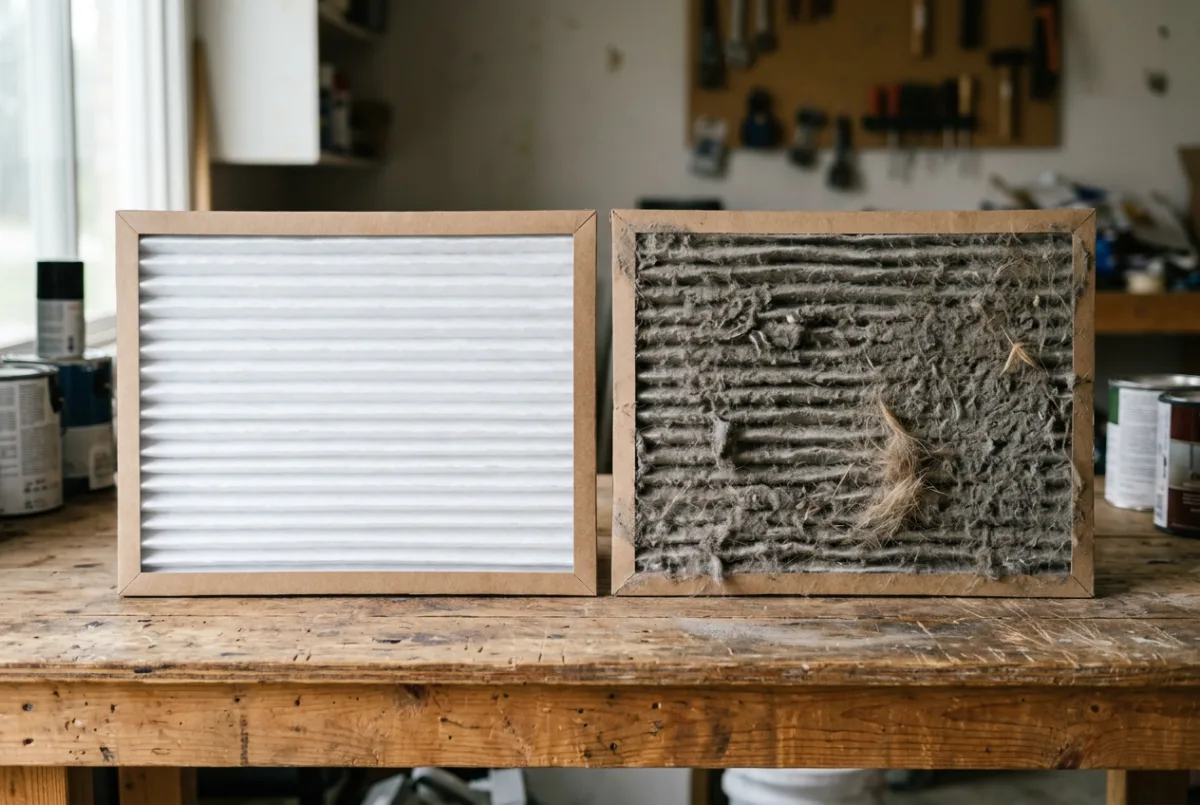
    New clean AC air filter next to a dust-clogged air filter
    New filter (left) vs. a clogged one (right). The one on the right is enough to freeze a coil.

    On refrigerant: handling it legally requires EPA Section 608 certification, which is why a leak is never a DIY job. The EPA’s Section 608 program explains the rules technicians follow.

    How to tell if your AC is frozen

    • Ice or frost on the copper lines at the outdoor unit
    • Ice on the indoor coil or around the air handler
    • The system runs, but the air from the vents is warm or weak
    • Water around the indoor unit as the ice melts
    • A hissing or bubbling sound, which can point to a refrigerant leak

    Watch for water damage. When the ice melts, the drain pan and condensate line have to handle all of it. If they are already partly clogged, water can overflow into ceilings, closets and floors. See AC leaking water inside? Causes and fixes and why AC drain lines clog in South Florida.

    DIY or call a pro?

    What you noticeLikely causeWho fixes it
    Filter is gray and cloggedRestricted airflowYou: replace the filter
    Vents closed or blockedRestricted airflowYou: open and clear them
    Freezes again after thawing with a new filterLow refrigerant or dirty coilLicensed technician
    Hissing sound, rising power billRefrigerant leakLicensed technician
    Weak airflow at every ventBlower motor or capacitorLicensed technician

    How to keep your AC from freezing again

    • Check your filter monthly in the cooling season and change it every 30 to 90 days
    • Keep every supply vent and the return grille open and clear
    • Do not crank the thermostat way down to cool faster; it does not cool faster and makes freezing more likely
    • Schedule a yearly AC tune-up so a technician can clean the coil, check refrigerant and test the blower

    ENERGY STAR’s heating and cooling maintenance checklist is a good reference for what a proper tune-up should cover.

    When to call a professional

    Call a licensed technician if your AC freezes again after thawing, if you hear hissing, if the outdoor unit hums but the fan does not spin, or if water is leaking from the indoor unit. Our AC repair team serves Sunrise, Plantation, Fort Lauderdale, Weston and the rest of Broward County 24/7. If your system runs but is not keeping up, work through our AC running but not cooling checklist first.

    Good to know

    Frequently Asked Questions

    Why is my AC freezing up in Florida when it is so hot outside?

    Outdoor heat does not prevent freezing. The coil freezes because it gets too cold inside the system, usually from low airflow or low refrigerant.

    How long does it take a frozen AC to thaw?

    Light frost can clear in an hour or two with the fan on. A heavily iced coil can take several hours. Wait until all ice is gone before turning cooling back on.

    Can I run my AC if it is frozen?

    No. Turn cooling off and run only the fan. Running a frozen system can damage the compressor.

    Will a dirty filter really make my AC freeze?

    Yes. A clogged filter is the most common reason an air conditioner freezes up.

    Is a frozen AC an emergency?

    It is not dangerous, but it should be handled quickly. Shut off cooling to protect the compressor, let it thaw, and call a technician if it happens again.

    AC Frozen? We Can Help.

    Call any time, day or night. We will find out why it froze and fix it right.

    Book Service OnlineCall (954) 203-8426

    Cooling On Demand Inc. is a Florida Certified Air Conditioning Contractor, license #CAC1822848. Read our customer reviews.
  • Salt Air and Your AC: Protecting Coastal Fort Lauderdale Systems

    Salt Air and Your AC: Protecting Coastal Fort Lauderdale Systems

    Home / Blog / Coastal AC Care
    Coastal AC Care

    Salt Air and Your AC: Protecting Coastal Fort Lauderdale Systems

    Salt air shortens AC life near the coast. Learn how corrosion damages Fort Lauderdale systems, the warning signs, and how to protect your unit.

    By Cooling On Demand Inc.FL License #CAC18228483 min read
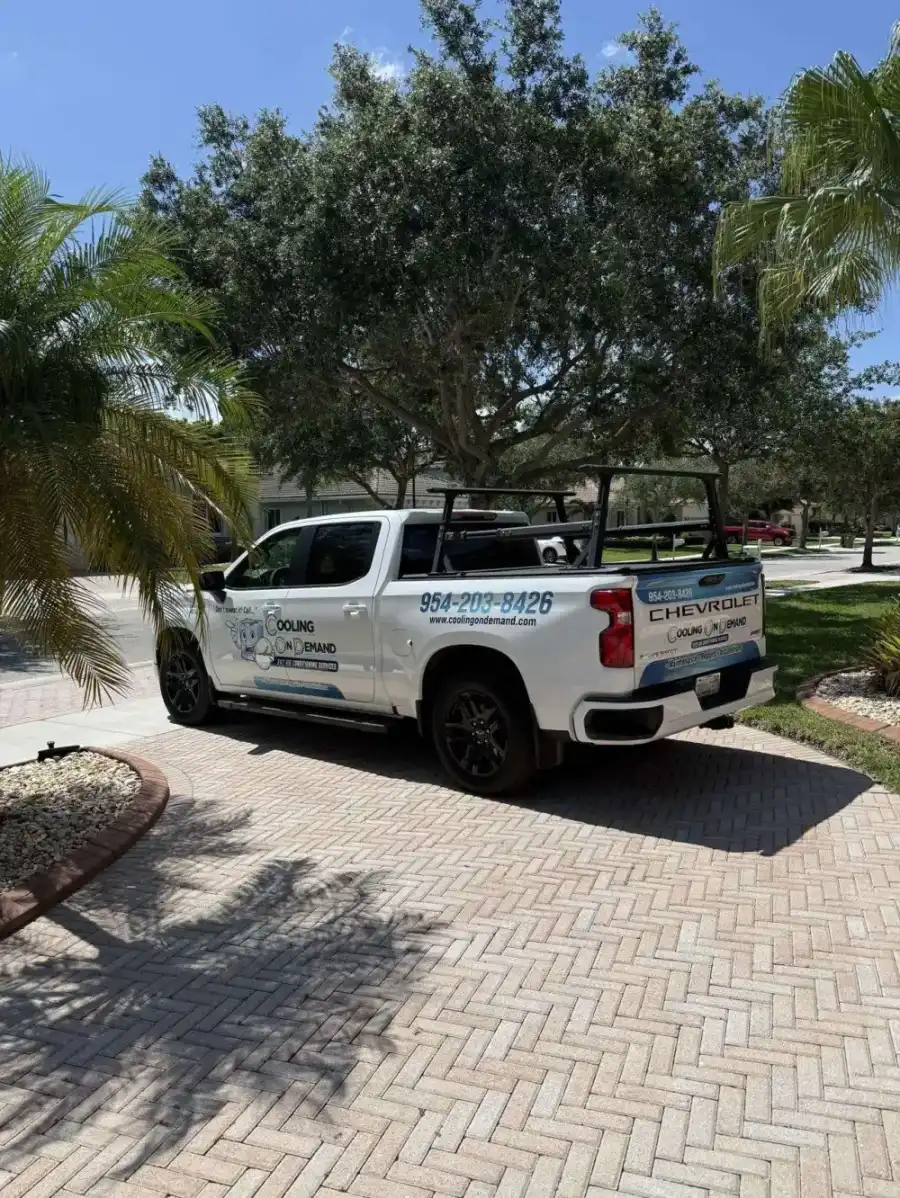
    Cooling On Demand service truck at a Fort Lauderdale home
    Quick answer

    If you live near the coast in Fort Lauderdale, salt air is quietly working on your air conditioner every day. Salt carried on the ocean breeze settles on the outdoor unit’s coil and metal cabinet, attracts moisture, and speeds up corrosion. Over time that corrosion causes refrigerant leaks, electrical problems and a shorter system life. Regular coil rinsing, protective coatings and the right equipment choices can add years to a coastal system.

    The Problem

    How salt air damages your AC

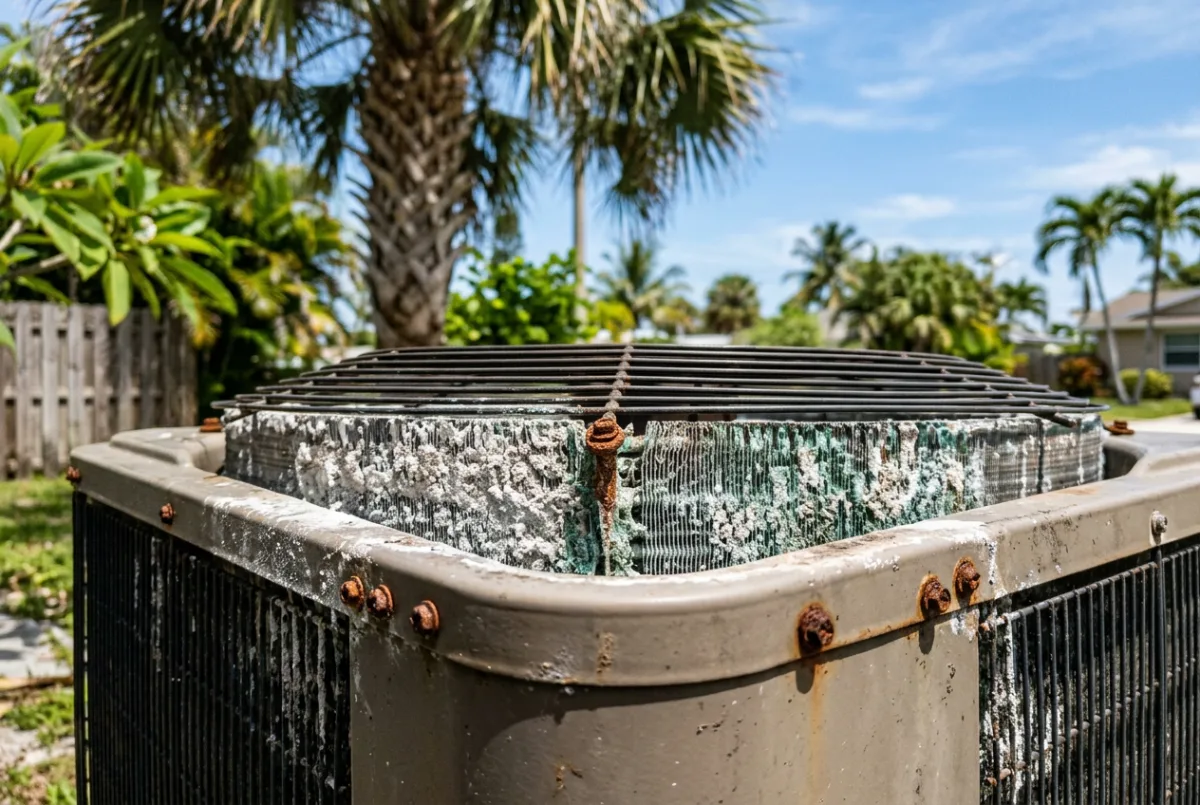
    Your outdoor unit’s condenser coil is made of thin copper tubing and aluminum fins designed to release heat quickly. Salt particles that land on the coil hold moisture against the metal. In South Florida’s heat and humidity, that combination speeds up corrosion in two ways:

    Fin and coil corrosion. The aluminum fins flake and crumble, blocking airflow and reducing efficiency.

    Galvanic corrosion. Where copper and aluminum touch, salt moisture creates a reaction that eats away the metal. This is a common cause of pinhole refrigerant leaks.

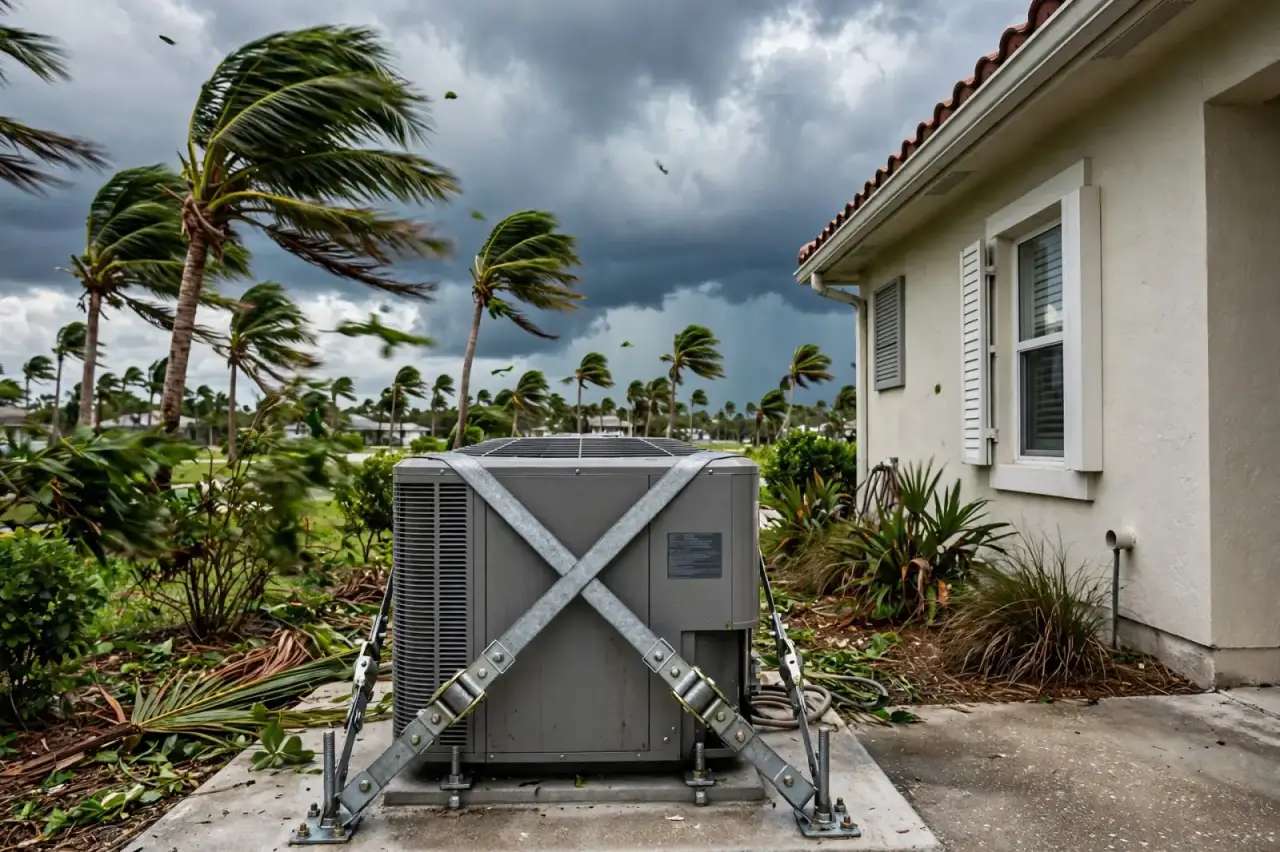
    Salt also attacks electrical connections, screws, the cabinet and the unit’s mounting hardware, including hurricane tie-downs.

    Outdoor AC condenser coil with white salt crust and corrosion near the coast
    Salt crust and corrosion on condenser fins: the slow damage coastal air does to an AC.
    At Risk

    Who is most at risk?

    Homes and condos closest to the ocean and the Intracoastal see the most salt exposure, but coastal breezes carry salt well inland. Units on balconies, rooftops and open, wind-facing sides of buildings get hit hardest. If you can see white crust on your outdoor furniture or car, your AC is getting it too.

    Warning signs of salt corrosion

    • White, chalky or green crust on the outdoor coil or cabinet
    • Fins that crumble or flake when touched
    • Rust on the cabinet, screws or tie-downs
    • Rising electric bills or longer run times
    • Repeated refrigerant leaks
    • The system struggling to cool on hot days
    Protection

    How to protect a coastal AC system

    Rinse the outdoor coil regularly

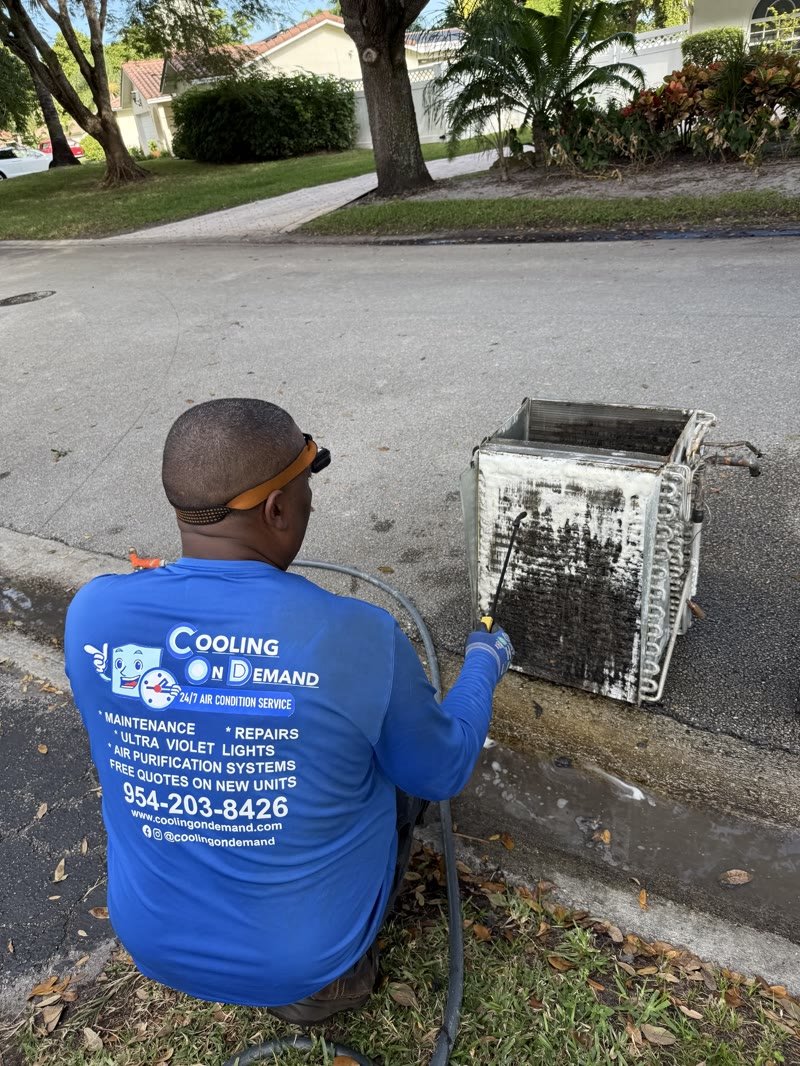
    A gentle rinse with fresh water washes salt off before it does damage. With power to the unit turned off at the disconnect, spray from the inside out if possible, using a garden hose on a low setting. Never use a pressure washer, which bends fins. Near the coast, a monthly rinse during the cooling season is a common recommendation, plus an extra rinse after any storm that leaves salt spray on the unit.

    Schedule maintenance more often

    Coastal systems benefit from professional maintenance at least twice a year. Our AC tune-up includes a condenser coil rinse, electrical checks and a refrigerant check, which catches small leaks before they become big ones.

    Ask about protective coil coatings

    Corrosion-resistant coatings can be applied to new or existing coils to create a barrier against salt. Coatings work best on a clean coil and wear over time, so ask your technician whether one makes sense for how close your home is to the water.

    Choose coastal-ready equipment

    When it is time to replace, some manufacturers offer coastal or corrosion-resistant models with coated coils and upgraded cabinets. Ask about them during your installation quote.

    Check tie-downs and hardware

    Hurricane tie-downs and mounting hardware rust faster near the coast. Have them inspected so your unit stays secured in a storm.

    Lifespan

    How long does an AC last near the coast?

    Air conditioners in South Florida already work harder than in most places, and salt exposure can shorten their life further. Regular rinsing and maintenance make the biggest difference. Our post on how long an AC lasts in South Florida covers the full picture.

    Good to know

    Frequently Asked Questions

    How often should I rinse my AC near the beach?

    Many coastal homeowners rinse the outdoor coil monthly. Always turn off power at the disconnect first and use gentle water pressure.

    Can salt corrosion cause refrigerant leaks?

    Yes. Corrosion can create tiny pinhole leaks in the coil, which is one of the most common coastal AC problems.

    Are coil coatings worth it?

    For systems close to the ocean, protective coatings can help slow corrosion and extend coil life.

    Does salt air affect condos and high-rises too?

    Yes. Units on balconies and rooftops are often the most exposed.

    Should I cover my outdoor unit to protect it from salt?

    No. Covers trap moisture against the metal and can make corrosion worse. Rinsing is the better approach.

    Coastal AC Service in Fort Lauderdale.

    We provide 24/7 AC service across Fort Lauderdale.

    Book Service OnlineCall (954) 203-8426

    Cooling On Demand Inc. is a Florida Certified Air Conditioning Contractor, license #CAC1822848. Read our customer reviews.
  • SEER2 Explained: What Rating Does a Florida Home Need?

    SEER2 Explained: What Rating Does a Florida Home Need?

    Home / Blog / Buying Guide
    Buying Guide

    SEER2 Explained: What Rating Does a Florida Home Need?

    SEER2 replaced SEER in 2023. Learn what the rating means, the 14.3 SEER2 minimum for Florida, and how to choose the right efficiency for your home.

    By Cooling On Demand Inc.FL License #CAC18228483 min read
    Family enjoying efficient, comfortable cooling at home
    Quick answer

    SEER2 is the current efficiency rating for central air conditioners and heat pumps. The higher the number, the less electricity the system uses to cool your home. In Florida and the rest of the Southeast, new split-system central air conditioners must meet a federal minimum of 14.3 SEER2. Because Florida systems run nearly year-round, many homeowners find that going above the minimum pays off in lower power bills.

    The Basics

    What does SEER2 mean?

    SEER2 stands for Seasonal Energy Efficiency Ratio 2. It measures how much cooling a system delivers over a typical season compared to the electricity it uses. Think of it like miles per gallon for your air conditioner.

    SEER2 replaced the older SEER rating on January 1, 2023. The new test uses conditions that better match how systems work in real homes, including more realistic ductwork resistance. Because the test is tougher, the same system scores a lower number under SEER2 than it did under SEER. That is why the numbers look different, even though the equipment is not less efficient.

    SEER vs. SEER2: why the numbers changed

    If you are comparing an older quote or an older system to a new one, keep in mind that a SEER2 number is typically lower than the equivalent SEER number for the same equipment. For example, the old Southeast minimum was 15 SEER, and the new minimum is 14.3 SEER2. Those represent roughly the same efficiency level measured two different ways.

    When comparing systems, always compare SEER2 to SEER2.

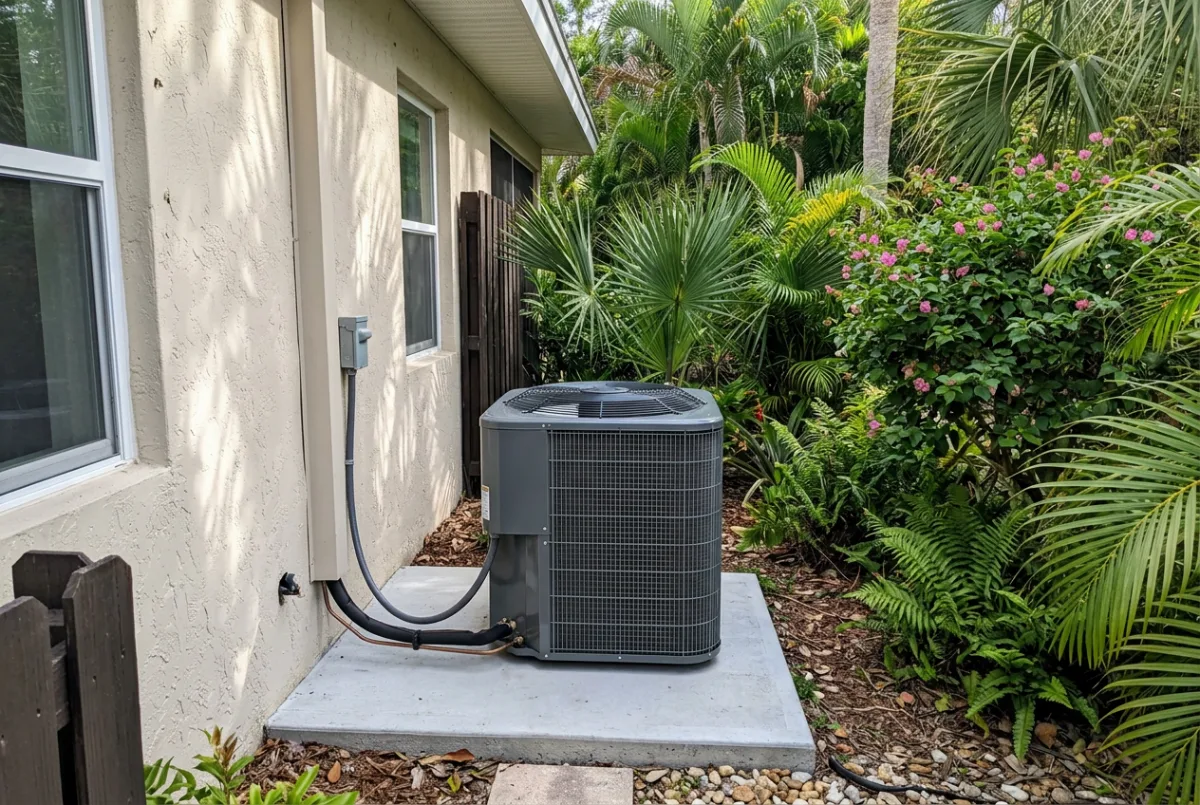
    New outdoor AC condenser on a concrete pad beside a Florida home
    A higher SEER2 rating means less electricity for the same cooling.
    Florida Rules

    What is the minimum SEER2 in Florida?

    Florida is in the federal Southeast region. For new split-system central air conditioners under 45,000 Btu/h (most homes), the minimum is 14.3 SEER2. Larger systems have a slightly lower minimum. This applies to newly installed equipment, not to the system already in your home. Your existing AC is legal to keep running and repair.

    Pick Your Rating

    What SEER2 rating should you choose?

    The right rating depends on how long you plan to stay in the home, your budget, and how hard your system works. Here is how we explain it to homeowners:

    14.3 to 15 SEER2: meets code and is the lowest upfront cost. A reasonable choice if you may sell the home in the next few years.

    15.3 SEER2 and up: a common sweet spot for Florida homes. It is also the minimum for FPL’s residential AC rebate, which since September 2025 requires at least 15.3 SEER2 (one point above the federal minimum).

    16 to 20+ SEER2: higher upfront cost, lower monthly bills. Often includes variable-speed technology that runs longer at lower speeds, which also removes more humidity. That matters a lot in South Florida.

    Real Savings

    Does a higher SEER2 really save money in Florida?

    In general, yes, more so here than in milder climates. Because South Florida systems run so many hours each year, each step up in efficiency adds up. The savings depend on your home’s size, insulation, ductwork and thermostat habits. During a free installation quote, we can walk you through the options for your specific home so you can weigh the upfront cost against the monthly savings.

    Efficiency is only part of the story

    A high SEER2 system that is the wrong size, or installed on leaky ducts, will not deliver its rated efficiency. That is why we size every system based on your home and inspect your ductwork before recommending equipment. An oversized system cools too fast and shuts off before it removes humidity, leaving your home cold but clammy.

    Learn more about our AC installation process, or read about the refrigerant change affecting new systems.

    Good to know

    Frequently Asked Questions

    Is 14.3 SEER2 good for Florida?

    It is the legal minimum for most new central AC systems in the Southeast. Many Florida homeowners choose a higher rating because their systems run so many hours each year.

    Is SEER2 the same as SEER?

    No. SEER2 uses a newer, tougher test, so the same system has a lower SEER2 number than its old SEER number.

    Do I have to replace my AC because of SEER2?

    No. The SEER2 minimum applies to new equipment. Your current system can stay in service and be repaired.

    Where can I find my system’s SEER2 rating?

    Check the yellow EnergyGuide label or the manufacturer’s rating sheet. You can also look up the model number in the AHRI directory.

    What SEER2 do I need for an FPL rebate?

    FPL’s residential AC rebate currently requires 15.3 SEER2 or higher and a full system replacement (outdoor unit, indoor air handler and coil), installed by an FPL Participating Independent Contractor. Program terms can change, so check with FPL before you buy.

    Thinking About a New System?

    Get a free in-home quote. Right now, take $150 off a new AC installation when you book through the TopTec app.

    Book Service OnlineCall (954) 203-8426

    Cooling On Demand Inc. is a Florida Certified Air Conditioning Contractor, license #CAC1822848. Read our customer reviews.
  • AC Running but Not Cooling? 7 Things to Check

    AC Running but Not Cooling? 7 Things to Check

    Home / Blog / AC Troubleshooting
    AC Troubleshooting

    AC Running but Not Cooling? 7 Things to Check

    Your AC is running but the house will not cool down. Check these 7 common causes first, from filters to frozen coils, and know when to call a pro.

    By Cooling On Demand Inc.FL License #CAC18228484 min read
    Cooling On Demand technician diagnosing an indoor AC unit
    Quick answer

    If your air conditioner is running but your home is not getting cool, the cause is usually one of seven things: the thermostat setting, a dirty filter, blocked vents, a dirty outdoor unit, a frozen evaporator coil, low refrigerant, or a failed part like a capacitor or fan motor. The first four you can often check yourself in a few minutes. The last three need a licensed technician.

    Work through this list in order before you call.

    Troubleshoot First

    1. Check the thermostat settings

    It sounds obvious, but it is one of the most common causes. Make sure the thermostat is set to Cool, the fan is set to Auto (not On), and the set temperature is actually below the room temperature. If the fan is set to “On,” it will blow air continuously, even when the cooling cycle is off, which can feel like warm air coming from the vents.

    If the screen is blank or dim, replace the batteries.

    2. Replace the air filter

    A clogged filter chokes airflow. Less air moving across the coil means less cooling in your rooms, and in severe cases the coil can freeze. In Florida, check your filter monthly during summer. If you hold it up to a light and cannot see through it, change it.

    3. Make sure vents and returns are open

    Walk through the house. Supply vents should be open and unblocked by furniture or rugs. The return grille (the large vent that pulls air back into the system) should be clear. Closing vents in unused rooms does not save energy in most systems; it can actually reduce performance.

    4. Look at the outdoor unit

    Go outside while the AC is running. You should hear the compressor humming and see the fan on top spinning. Check for:

    • Leaves, grass or debris packed against the sides
    • A fan that is not spinning, or spins slowly
    • A humming or buzzing sound with no fan movement

    If the fan is not spinning but the unit is humming, turn the system off. A failed capacitor or fan motor can damage the compressor if the system keeps running. This is a job for a technician.

    5. Check for ice on the coil or lines

    Look at the copper refrigerant lines going into the outdoor unit, and if you can, at the indoor unit. Ice or frost means the evaporator coil is freezing. Common causes are a dirty filter, low airflow or low refrigerant.

    If you see ice, turn the cooling off and set the fan to On for a few hours to thaw it. Do not chip at the ice. If it freezes again after thawing and changing the filter, call a technician.

    6. Low refrigerant (a leak)

    Your AC does not “use up” refrigerant. If it is low, there is a leak. Signs include warm air from vents, ice on the lines, a hissing or bubbling sound, and higher electric bills. Refrigerant work requires EPA certification, and simply adding refrigerant without fixing the leak only delays the problem. Our post on the AC refrigerant change explains what this means for older systems.

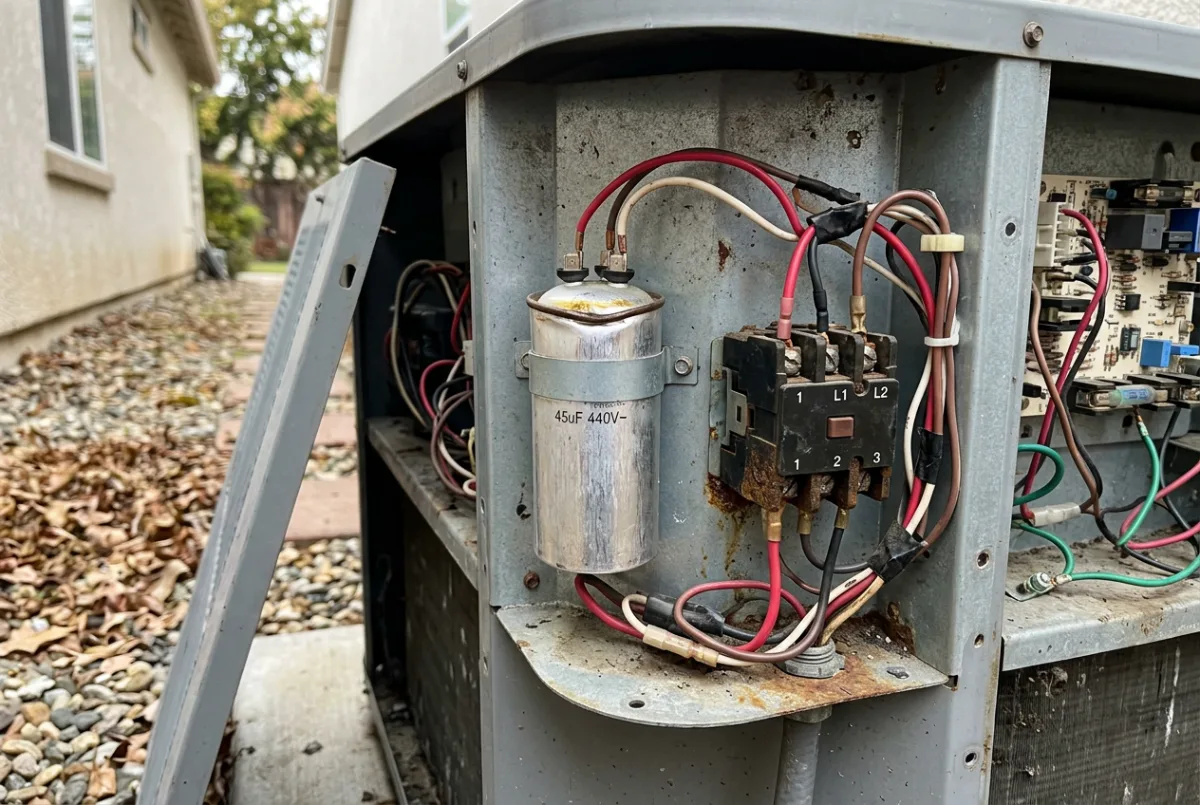
    Swollen run capacitor inside an outdoor AC condenser electrical panel
    A swollen capacitor (center) is one of the most common reasons an AC runs but does not cool.

    7. A failed part

    Capacitors, contactors, fan motors and compressors all wear out, especially in Florida where systems run nearly year-round. A weak capacitor is one of the most common repairs we make: the system tries to run but cannot start the compressor or fan properly. Diagnosing failed parts takes professional testing tools.

    Know The Difference

    Is it the heat, or is something wrong?

    On extremely hot days, even a healthy system may struggle to keep up. A properly sized and working system should typically keep your home about 15 to 20 degrees cooler than outside. If it is 95 degrees out and your home is holding at 78, the system may be working as designed. If it is 85 out and your home is 82 and climbing, something is wrong.

    Get Help

    When to call a professional

    Call a licensed technician if:

    • You see ice that comes back after thawing
    • The outdoor fan is not spinning
    • You hear buzzing, grinding or squealing
    • The breaker trips when the AC starts
    • You have checked the filter, thermostat and vents and it still is not cooling

    Our AC repair service is available 24/7 across Broward County, including Sunrise, Plantation and Fort Lauderdale. The diagnostic is free when we do the repair.

    If your system will not turn on at all, see our guide: AC stopped working at night? What to check first.

    Good to know

    Frequently Asked Questions

    Why is my AC running but blowing warm air?

    The most common causes are the thermostat fan set to “On,” a dirty filter, a frozen coil, low refrigerant, or a failed capacitor or fan motor outside.

    Can a dirty filter really stop my AC from cooling?

    Yes. A clogged filter restricts airflow, which reduces cooling and can cause the evaporator coil to freeze.

    How long should my AC take to cool my house?

    It depends on the home and the weather, but a working system should bring the temperature down steadily, often about a degree every 15 to 30 minutes after it starts.

    Should I keep running my AC if it is not cooling?

    If you see ice, hear buzzing, or the outdoor fan is not spinning, turn it off. Running it can damage the compressor, which is the most expensive part to replace.

    Is low refrigerant something I can fix myself?

    No. Handling refrigerant requires EPA certification, and low refrigerant means there is a leak that must be found and repaired.

    Still Not Cooling?

    Call any time, day or night. We will find the problem fast.

    Book Service OnlineCall (954) 203-8426

    Cooling On Demand Inc. is a Florida Certified Air Conditioning Contractor, license #CAC1822848. Read our customer reviews.
  • Why Does My AC Smell Musty? Causes and Fixes for Broward Homes

    Why Does My AC Smell Musty? Causes and Fixes for Broward Homes

    Home / Blog / Indoor Air Quality
    Indoor Air Quality

    Why Does My AC Smell Musty? Causes and Fixes for Broward Homes

    A musty AC smell usually means moisture and growth on the coil, drain pan or ducts. Learn the causes, what you can check, and how Broward homeowners fix it.

    By Cooling On Demand Inc.FL License #CAC18228484 min read
    Technician working inside an AC air handler
    Quick answer

    A musty or mildew smell when your air conditioner turns on almost always means moisture is sitting somewhere in the system and something is growing in it. In South Florida, the most common sources are the evaporator coil, the drain pan, a clogged condensate line, or dirty ductwork. The good news: most musty AC smells can be fixed with a professional cleaning, and in many homes a UV light keeps them from coming back.

    What’s That Smell

    Why Florida air conditioners are prone to musty smells

    Your air conditioner does two jobs: it cools the air and it pulls humidity out of it. In Broward County, that second job is huge. On a typical summer day your system can remove gallons of water from your home’s air. That water collects on the cold evaporator coil, drips into the drain pan, and flows out through the condensate line.

    When everything is clean and draining, that is fine. But the coil and pan are dark, damp and full of dust from the air passing through. That is exactly the environment mold, mildew and bacteria love. Once they get a foothold, every time the blower kicks on, it pushes that smell through every vent in the house.

    Find The Source

    The 5 most common causes

    1. A dirty evaporator coil

    Dust and debris that slip past the filter stick to the wet coil and become food for biological growth. This is the number one cause of a musty AC smell we see in Broward homes.

    2. Standing water in the drain pan

    If the drain pan is cracked, rusted or not draining fully, water sits there between cycles and turns stagnant.

    3. A clogged condensate drain line

    Algae and sludge build up inside the drain line until water backs up. Before it overflows, it often starts to smell. Our post on why AC drain lines keep clogging in South Florida covers this in detail.

    4. A dirty or wet air filter

    A filter that has not been changed in months can hold moisture and odors of its own.

    5. Dirty or leaky ductwork

    Ducts that run through a hot, humid attic can collect condensation. Leaky return ducts can also pull in musty air from the attic or wall cavities.

    Do It Yourself

    What you can check yourself

    Replace the air filter. It is cheap and fast, and it rules out the simplest cause.

    Look at the drain pan. If you can safely see under the indoor unit, check for standing water, rust or slime.

    Flush the drain line. Pour about a cup of white vinegar into the drain line access.

    Notice when the smell happens. A smell only at startup often points to the coil or pan. A smell that lingers all the time can point to ducts or a bigger moisture problem.

    Do not spray household cleaners or air fresheners into your vents or onto the coil. They can damage components and only mask the smell.

    The Professional Fix

    How a professional fixes a musty AC smell

    When we come out for a musty smell, we look at the whole moisture path, not just one part. A typical visit includes:

    • Inspecting and sanitizing the evaporator coil
    • Cleaning the drain pan and vacuuming the condensate line
    • Checking that water drains fully and the float switch works
    • Wiping down the inside of the cabinet to remove buildup
    • Checking airflow and refrigerant, since low airflow can make the coil sweat more

    These steps are part of our standard AC tune-up, which is why a yearly tune-up is the best prevention.

    How to keep the smell from coming back

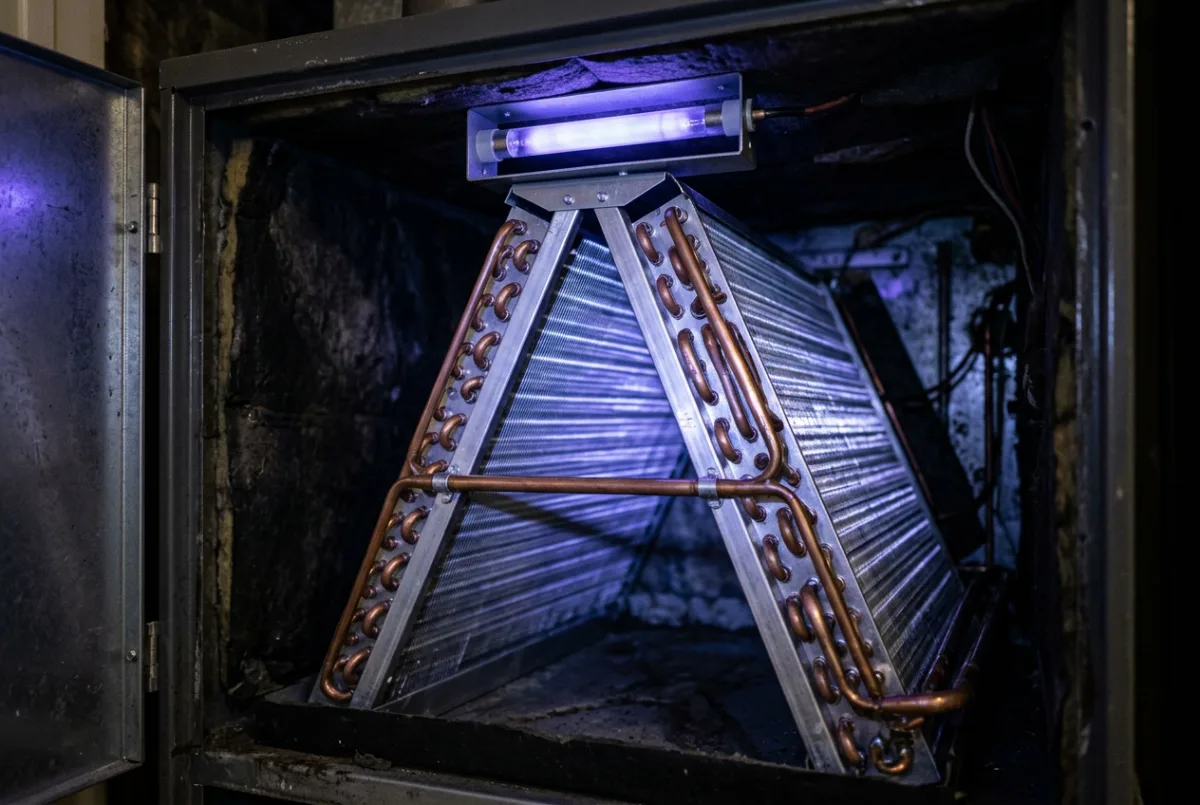
    UV-C lamp glowing inside an AC system

    If your home has had musty smells more than once, consider a UV-C light installed near the evaporator coil. It runs continuously and keeps the coil and drain pan from growing the mold and bacteria that cause odors. You can read our honest take on whether UV lights work in AC systems, or learn more about our UV light and air purification service.

    Other prevention tips:

    • Change your filter every 30 to 90 days
    • Keep indoor humidity in check by not setting the thermostat to “fan on” all day, which can re-evaporate moisture from the coil
    • Schedule a tune-up at least once a year

    When a musty smell is a bigger problem

    Call a professional promptly if the smell comes with visible mold around vents, water stains on ceilings near the indoor unit, family members with new allergy or breathing symptoms, or water leaking from the unit. These can mean a moisture problem that will keep getting worse.

    Good to know

    Frequently Asked Questions

    Is a musty AC smell dangerous?

    The smell itself is a sign of biological growth. Many people notice allergy symptoms when it is present. It is worth fixing quickly rather than masking it.

    Can I spray Lysol into my AC vents?

    We do not recommend it. Sprays do not reach the coil or drain pan where the growth starts, and some chemicals can damage components.

    Will changing my filter fix a musty smell?

    Sometimes, if the filter itself is the source. More often the smell comes from the coil or drain pan, which needs cleaning.

    Why does my AC smell like dirty socks?

    That “dirty sock” smell is commonly caused by bacteria growing on the evaporator coil. A coil cleaning usually solves it.

    Do UV lights stop AC smells?

    UV-C lights help prevent the growth that causes musty odors on the coil and drain pan. They work best after the system has been cleaned.

    Get Rid of That Musty Smell.

    Licensed, local and available 24/7 across Broward County.

    Book Service OnlineCall (954) 203-8426

    Cooling On Demand Inc. is a Florida Certified Air Conditioning Contractor, license #CAC1822848. Read our customer reviews.
  • Fall AC Checklist for South Florida: What to Do After Hurricane Season

    Fall AC Checklist for South Florida: What to Do After Hurricane Season

    Home / Blog / AC Maintenance
    AC Maintenance

    Fall AC Checklist for South Florida: What to Do After Hurricane Season

    Hurricane season ends November 30. Use this fall AC checklist for Broward homes to catch storm damage, clogs and wear before they turn into repairs.

    By Cooling On Demand Inc.FL License #CAC18228484 min read
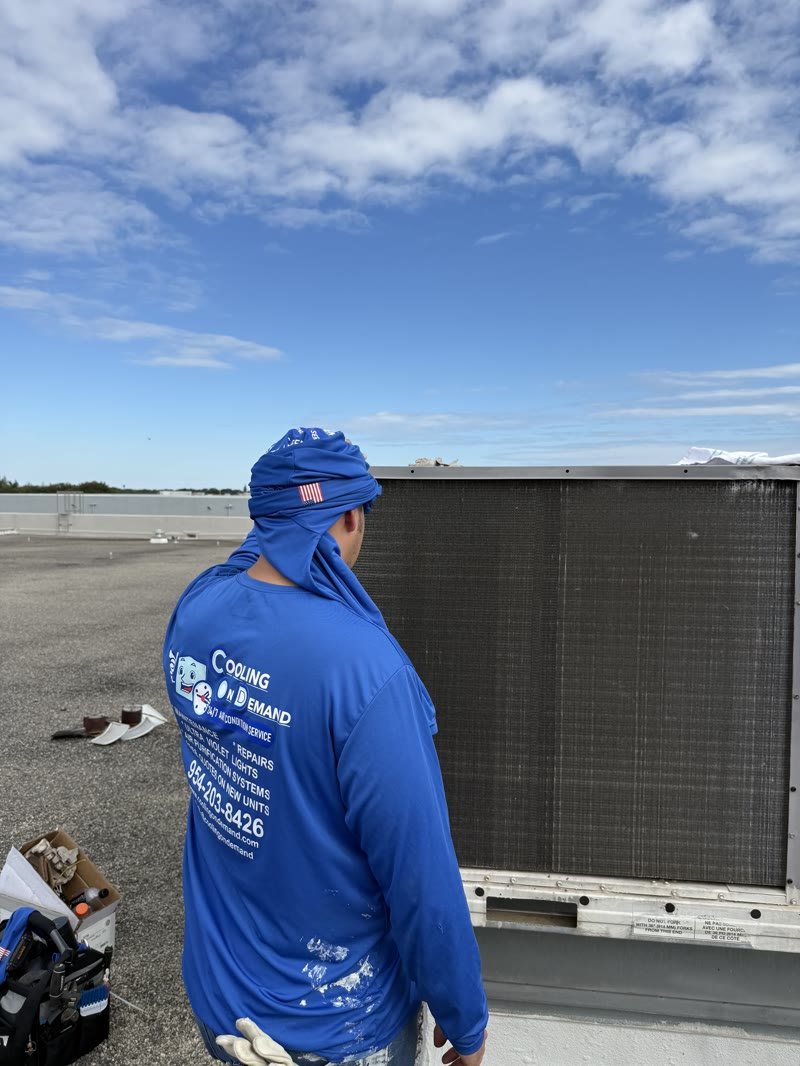
    Cooling On Demand technician servicing an outdoor AC unit
    Quick answer

    Fall in South Florida is the best time to give your air conditioner a once-over. Hurricane season officially ends November 30, temperatures ease a little, and your system finally gets a break after months of nonstop running. A quick fall check catches storm damage, drain clogs and worn parts while they are still small, cheap fixes instead of next summer’s emergency.

    Here is the checklist we recommend to Broward County homeowners every October and November.

    After The Storm

    1. Walk around the outdoor unit

    Start outside. Summer storms throw a lot at your condenser, and damage is easy to miss if you never look.

    Clear debris. Pull leaves, palm fronds, mulch and grass clippings away from the unit. Keep at least two feet of open space on every side so it can breathe.

    Look for bent fins. The thin metal fins on the sides bend easily from wind-blown debris. A few bent fins are normal. Large flattened areas block airflow and make the system work harder.

    Check that the unit is level. Heavy rain can wash out soil under the pad. A tilted unit strains the compressor and can damage refrigerant lines.

    Inspect the tie-downs. Florida requires outdoor units to be secured against wind. Make sure the straps or brackets are still tight and not rusted through.

    Technician installing hurricane tie-down brackets on an AC unit

    2. Check for signs of water or flood damage

    If water reached your outdoor unit during a storm, do not assume it is fine just because it turns on. Flood water can corrode electrical connections and controls that fail weeks later. Signs to watch for:

    • A water line or mud mark on the cabinet
    • Rust or white corrosion on electrical connections
    • Breakers tripping when the AC starts
    • A burning or electrical smell

    If you see any of these, turn the system off at the breaker and have a licensed technician inspect it before running it again. Our hurricane prep guide explains why a flooded unit should always be checked first.

    Fall Maintenance

    3. Flush the drain line

    Summer humidity means your AC pulled gallons of water out of your home’s air every day. That constant moisture feeds algae and slime in the condensate drain line, and fall is when a lot of those lines finally clog.

    Locate the drain line access (often a white PVC tee near the indoor unit with a cap on top), and pour in about a cup of white vinegar. If you see standing water in the drain pan, or the float switch has already shut the system off, the line likely needs a professional cleaning. Our post on why AC drain lines clog in South Florida walks through it.

    4. Change or wash the air filter

    After a summer of heavy use, your filter is almost certainly dirty. A clogged filter cuts airflow, raises your power bill, and can freeze your evaporator coil. Most standard 1-inch filters should be changed every 30 to 90 days in Florida, more often if you have pets or allergies.

    5. Test the thermostat and listen to the system

    Run the system through a full cycle and pay attention:

    • Does it start and stop on its own when the set temperature is reached?
    • Do you hear new noises: grinding, squealing, rattling or loud clicking?
    • Is cool air coming from every vent, with no rooms that stay warm?

    Replace thermostat batteries now, even if they still work. A dead thermostat battery is one of the most common “my AC stopped working” calls we get.

    6. Schedule a professional tune-up

    A homeowner check catches the obvious problems. A professional tune-up catches the ones you cannot see: weak capacitors, low refrigerant, dirty coils and loose electrical connections. Our complete AC tune-up (discounted from $115) includes:

    • Cleaning and vacuuming the drain line and drain pan
    • Sanitizing the evaporator coil
    • Rinsing the condenser coil
    • Checking electrical components and connections
    • Checking refrigerant levels
    • Changing the filter (customer-provided filter)

    Fall is also a smart time for a tune-up because it is usually easier to get an appointment than in the middle of a July heat wave.

    Why It Matters

    Why fall maintenance matters more in Florida

    In most of the country, air conditioners rest for half the year. In Broward County they run nearly year-round. That means more wear, more moisture and more chances for small issues to grow. A fall check after hurricane season gives you a clean starting point before the next cooling season begins, and it is the easiest way to avoid paying for an emergency repair on the hottest day of the year.

    Good to know

    Frequently Asked Questions

    When does hurricane season end in Florida?

    The Atlantic hurricane season runs from June 1 to November 30 each year.

    Do I need to service my AC in the fall if it is working fine?

    It is a good idea. Many problems, like a weak capacitor or a partially clogged drain line, do not show symptoms until they fail. A fall tune-up finds them early.

    Should I cover my outdoor unit for the winter in South Florida?

    No. South Florida winters are mild and your system may run on warm days. Covers can also trap moisture and invite rust or pests.

    How often should I change my AC filter in Florida?

    Every 30 to 90 days for standard filters, depending on the filter type, pets, allergies and how often your system runs.

    Can storm damage show up weeks later?

    Yes. Water exposure can corrode electrical parts slowly. If your unit was flooded or hit by debris, have it inspected even if it seems to run normally.

    Book Your Fall AC Check.

    Get ahead of next summer. We are available 24/7 across Sunrise, Plantation, Fort Lauderdale and Broward County.

    Book Service OnlineCall (954) 203-8426

    Cooling On Demand Inc. is a Florida Certified Air Conditioning Contractor, license #CAC1822848. Read our customer reviews.

  • Do UV Lights in Your AC Actually Work? An Honest Answer

    Do UV Lights in Your AC Actually Work? An Honest Answer

    Home / Blog / Indoor Air Quality
    Indoor Air Quality

    Do UV Lights in Your AC Actually Work? An Honest Answer

    What UV-C lights in your AC do well, what they do not, and which Florida homes benefit most.

    By Cooling On Demand Inc.FL License #CAC18228483 min read
    UV-C light glowing inside AC air handler
    Quick answer

    Yes, for a specific job. A UV-C light mounted at the indoor coil keeps the coil and drain pan free of mold and bacterial growth, which reduces musty odors and drain clogs, a common problem in humid Florida homes. It is not a replacement for filters or maintenance, and it does little for dust or pollen in the air.

    What a UV Light Does and Does Not Do

    A UV-C lamp inside your air handler bathes the evaporator coil and drain pan in germicidal light, 24 hours a day. It inactivates mold, bacteria, and biofilm on those surfaces. An ASHRAE field study found UV-C on a fouled coil improved heat transfer efficiency by over 14 percent. The EPA’s testing program confirmed UV inactivates a wide range of microorganisms, with effectiveness varying by organism and system design.

    What it does not do: remove dust or pollen (that is the filter’s job), clean mold already embedded in ducts, or sterilize the air in a single pass. Air moves through ducts fast, so one-pass airborne kill rates are modest. The honest framing is surface hygiene, not whole-air sterilization.

    Why Florida Humidity Makes This Worse

    Your evaporator coil stays wet whenever the AC runs, which in South Florida is most of the year. A wet coil in a dark air handler grows mold and biofilm the way a damp shower curtain does. That growth causes the musty “dirty sock” smell many homeowners notice, restricts airflow, and seeds the drain line with the algae that clogs it. UV-C breaks this cycle at the source.

    Clean AC evaporator coil lit by a UV-C lamp inside an air handler
    A coil-mounted UV-C lamp shines directly on the evaporator coil and drain pan.

    Coil-Mounted UV vs. Whole-Home Air Purifiers

    Coil-mounted UV targets surfaces: the coil and drain pan. That is the best-evidenced residential use. Whole-home air purifiers target the air stream as it passes, combining UV with filtration for broader indoor air quality. For musty smells and drain clogs, coil-mounted UV is the direct fix. For allergies and general air quality, a whole-home purifier is the broader tool. See our UV and purification services.

    Who Benefits Most

    • Homes with a recurring musty smell when the AC runs
    • Chronic drain line clogs
    • Allergy or asthma sufferers sensitive to mold
    • Coastal homes where the system runs nearly year-round

    Cost, Bulb Replacement, and Safety

    Professional installation typically runs a few hundred dollars depending on the unit type. UV-C bulbs last about 9,000 to 12,000 operating hours, so plan on roughly annual replacement; bulbs run $50 to $150 plus labor. Bulbs contain mercury and must be disposed of as household hazardous waste.

    Safety: UV-C harms eyes and skin, so the lamp must be professionally installed with safety interlocks, never directly visible during operation. Standard 254 nm germicidal UV does not produce ozone. Avoid ozone-generating devices in occupied homes, per ASHRAE.

    Questions to Ask Before You Buy

    • Is the lamp positioned to cover the coil and drain pan?
    • Is it 254 nm (no ozone)?
    • What does bulb replacement cost, and will you remind me?
    • Is my ductwork clean enough for UV to do its job?

    We install and service UV systems across Broward County. Call (954) 203-8426 for an honest assessment of whether UV makes sense for your system.

    Good to know

    Frequently Asked Questions

    How long do AC UV bulbs last?

    About 9,000 to 12,000 operating hours, roughly one year of continuous use. The bulb may still glow after that, but its germicidal output has faded. Annual replacement is the standard.

    Is UV light in an AC safe for pets and people?

    Yes when professionally installed. The lamp sits sealed inside the air handler with safety interlocks. You should never see the light during operation.

    Will a UV light fix a musty AC smell?

    Usually yes, because the evaporator coil and drain pan are the most common sources of HVAC musty odors, and UV prevents the mold and biofilm that cause them. It will not fix mold already embedded in ductwork.

    Can a UV light be added to my existing system?

    Yes. Retrofits are common: a technician mounts the lamp in the air handler near the coil and drain pan. Most residential units run on 24V or 120V power already present in the system.

    Need Help With Your AC?

    Cooling On Demand is available 24/7 across Broward and Dade County. Licensed, insured, and ready to help.

    Book Service OnlineCall (954) 203-8426

    Cooling On Demand Inc. is a Florida Certified Air Conditioning Contractor, license #CAC1822848. Services: Whole-home air purifiers, Maintenance. Read our customer reviews.
  • What Temperature Should You Set Your AC in a Florida Summer?

    What Temperature Should You Set Your AC in a Florida Summer?

    Home / Blog / Energy Savings
    Energy Savings

    What Temperature Should You Set Your AC in a Florida Summer?

    Around 78 degrees is the common recommendation for Florida summers when you are home, with higher settings when you are away.

    By Cooling On Demand Inc.FL License #CAC18228483 min read
    Smart thermostat set to energy-efficient temperature
    Quick answer

    Around 78 degrees is the common recommendation for Florida summers when you are home, with higher settings when you are away. In South Florida, humidity matters as much as temperature, so a well-maintained, correctly sized system that removes moisture will feel comfortable at a higher setting.

    • Home and awake: 78 F, the Energy Star balance point between comfort and savings
    • Away (4+ hours): raise it 7 to 10 degrees, but in Florida cap it around 80 to 82 F because of mold
    • Sleeping: around 82 F works for many people, lower if humidity is under control

    Each degree above 72 saves roughly 3 percent on cooling costs, according to the Department of Energy. A 7 to 10 degree setback for 8 hours a day can save up to 10 percent a year.

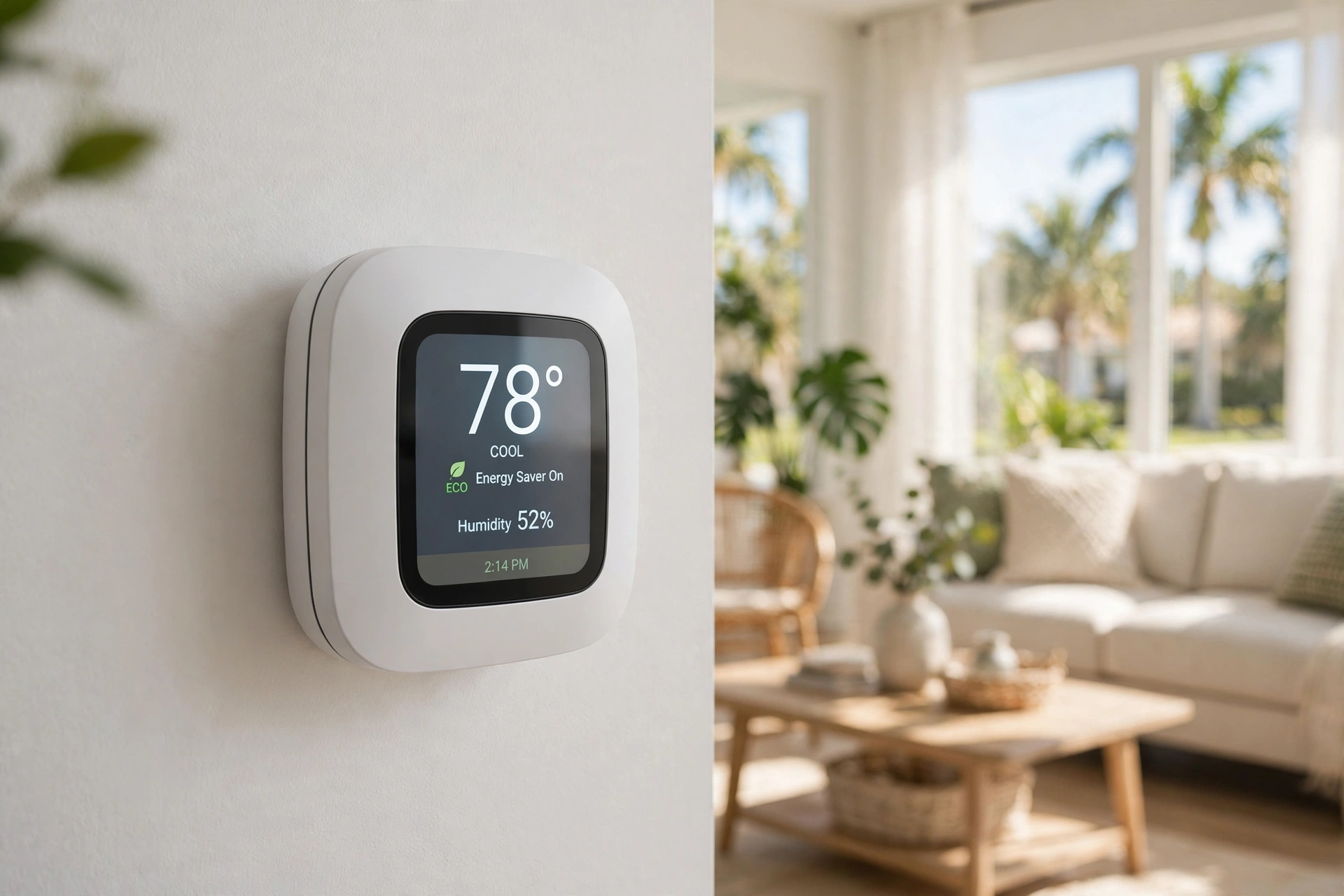
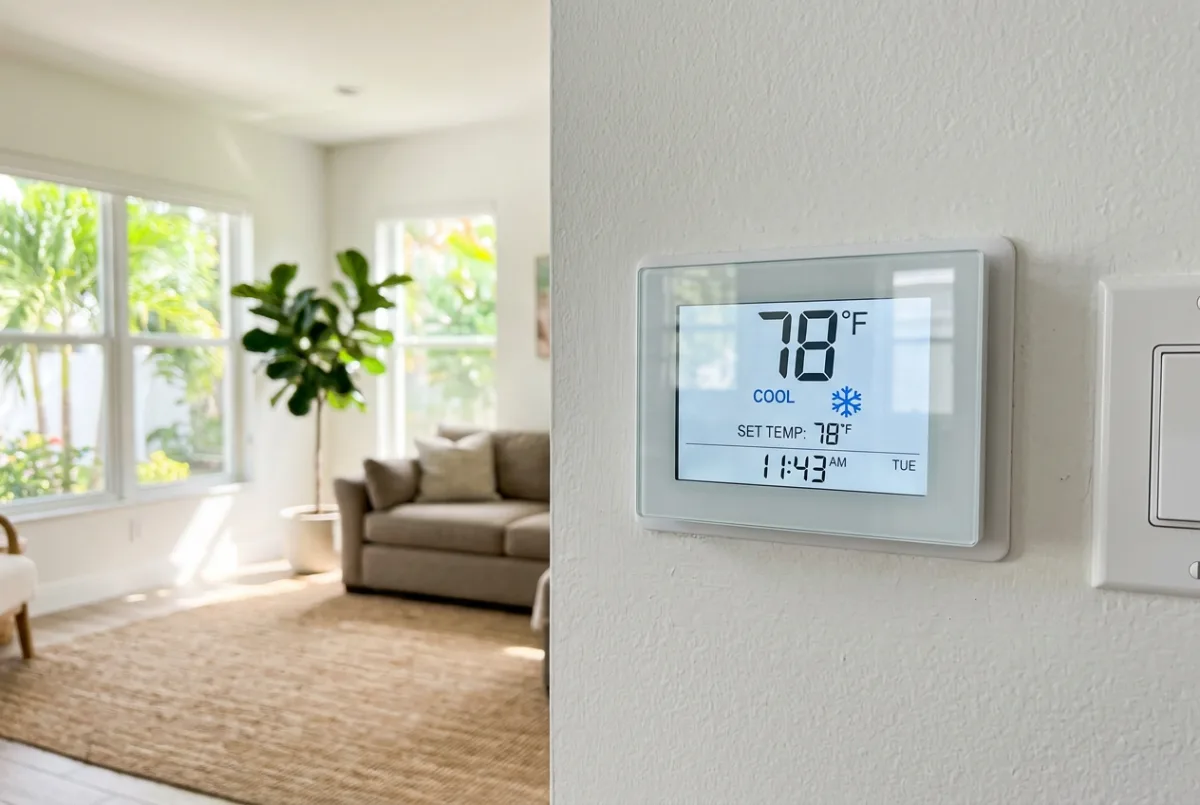
    Wall thermostat set to 78 degrees in cooling mode in a bright living room
    78 degrees is the common starting point for comfort and savings in a Florida summer.

    Why Humidity Changes the Answer

    78 degrees at 45 percent humidity feels fine. 78 degrees at 70 percent humidity feels miserable. Your AC dehumidifies as it cools, which is why a healthy, correctly sized system matters more than the number on the thermostat. An oversized system short-cycles: it blasts cold air, satisfies the thermostat, and shuts off before removing enough moisture. If your home feels clammy at normal settings, the system may be oversized or low on refrigerant, not set wrong. That is a repair call, not a thermostat problem.

    Away Settings That Will Not Invite Mold

    Do not turn the AC completely off when you leave a Florida home, even for a weekend. Without the AC running, indoor humidity climbs fast, and mold can start growing within 24 to 48 hours once humidity passes 60 percent. Florida Power and Light recommends 82 degrees or warmer when away, with the fan on AUTO (not ON, which re-evaporates moisture off the coil). For a week-long vacation, 80 to 82 degrees is the safe compromise between the electric bill and a mold remediation bill.

    Do Ceiling Fans Help?

    Yes. The Department of Energy says a ceiling fan’s wind-chill effect lets you raise the thermostat about 4 degrees with no loss of comfort. Run them counterclockwise in summer, and turn them off in empty rooms. Fans cool people, not rooms.

    When the Bill Is High No Matter What

    If your bill stays high at 78, the thermostat is not the problem. Common culprits: a dirty condenser coil, low refrigerant, leaky ducts, or a system nearing end of life. A tune-up catches most of these. If the system is 12+ years old and struggling, read our guide on how long ACs last in Florida.

    Good to know

    Frequently Asked Questions

    Is it cheaper to leave the AC on all day in Florida?

    The “it works harder to cool back down” idea is a myth. A higher indoor temperature slows heat flow into the house, so the system uses less energy overall while you are gone. Use a setback, not full off.

    What temperature should I leave my AC on vacation?

    80 to 82 degrees with the fan on AUTO. This keeps humidity in check and prevents mold while you are away.

    Why is my house humid even with the AC on?

    Usually an oversized system short-cycling, low refrigerant, or a dirty coil. All three reduce dehumidification. If humidity stays above 55 to 60 percent indoors, have it checked.

    Do ceiling fans let me raise the thermostat?

    Yes, about 4 degrees per the Department of Energy, with no reduction in comfort. They are the cheapest cooling upgrade in your home.

    Need Help With Your AC?

    Cooling On Demand is available 24/7 across Broward and Dade County. Licensed, insured, and ready to help.

    Book Service OnlineCall (954) 203-8426

    Cooling On Demand Inc. is a Florida Certified Air Conditioning Contractor, license #CAC1822848. Services: Tune-ups. Read our customer reviews.
  • How Long Does an AC Last in South Florida?

    How Long Does an AC Last in South Florida?

    Home / Blog / Buying Guide
    Buying Guide

    How Long Does an AC Last in South Florida?

    Florida ACs last 10-15 years vs 15-20 nationally. Salt air, year-round runtime, and maintenance habits that add years to your system.

    By Cooling On Demand Inc.FL License #CAC18228483 min read
    Technician inspecting older AC unit for lifespan assessment
    Quick answer

    Central AC systems in South Florida typically last about 10 to 15 years, often less than in milder climates, because they run almost year-round and coastal salt air corrodes outdoor coils. Annual maintenance, coil rinsing, and fixing small problems early are the biggest factors in reaching the upper end of that range.

    Florida vs. the National Average

    Nationally, a central AC lasts 15 to 20 years in mild climates with seasonal use. In South Florida, the realistic range is 10 to 15 years, and many contractors report 8 to 12 as typical. Coastal homes east of I-95 can see as little as 7 to 10 years without protective measures. The math is simple: a Florida system runs 335 to 345 days a year, often 8 to 18 hours a day. A system in Ohio runs about half that.

    What Wears Out First

    The usual suspects, in order of how often we replace them:

    • Capacitors and contactors: small electrical parts, the most common failures, inexpensive to replace
    • Blower motors: wear from constant runtime
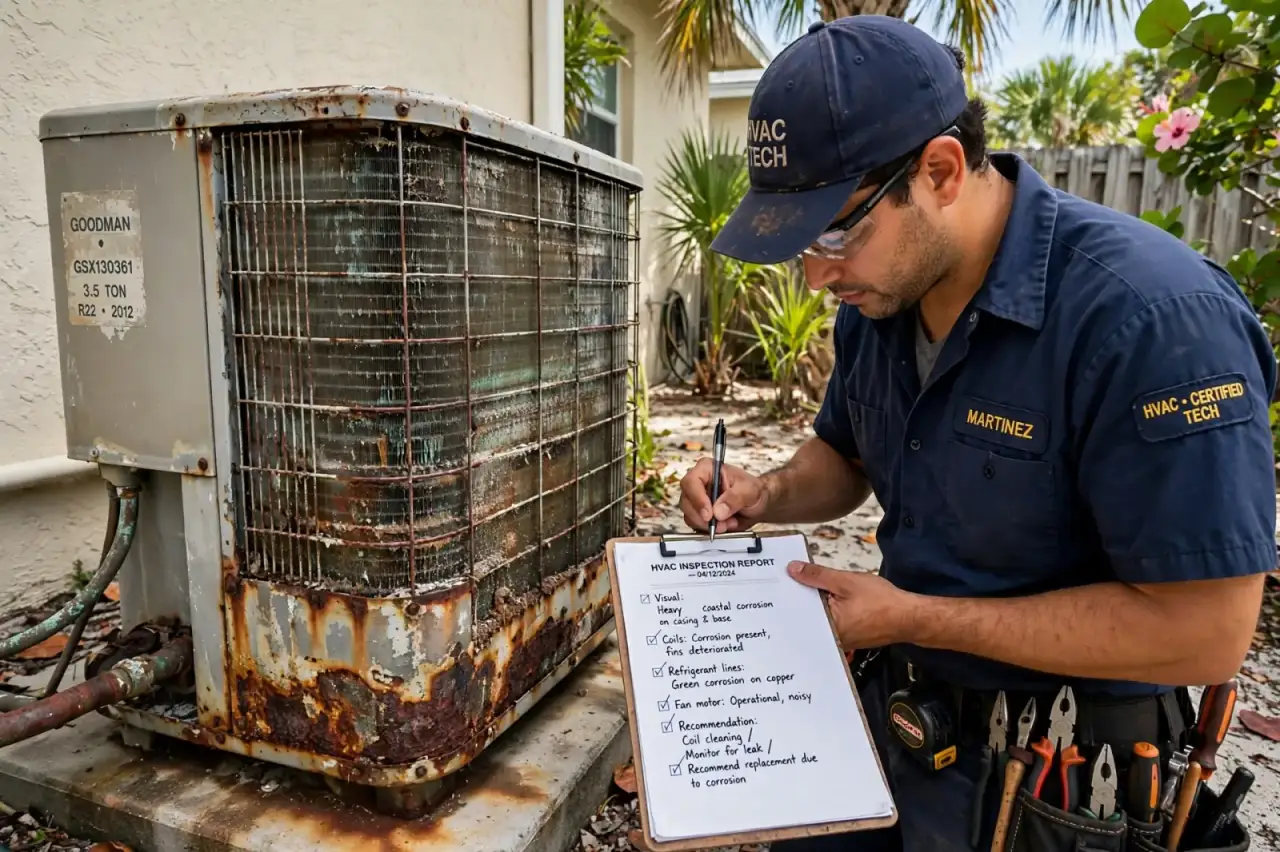
    • Condenser coils: salt air corrosion, especially near the coast
    • Compressors: the big one; when this fails on an old system, replacement usually makes more sense than repair
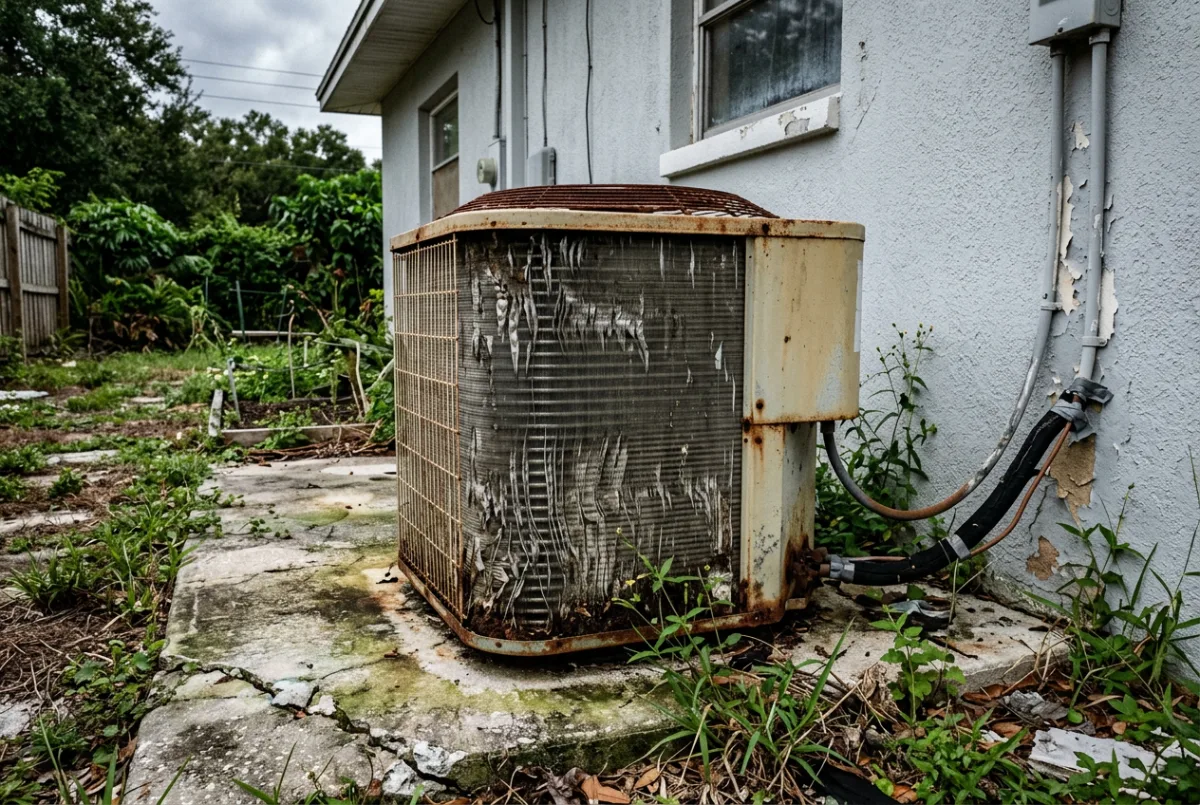
    Old, rust-stained outdoor AC condenser unit on a cracked concrete pad
    Sun, salt and year-round runtime wear Florida systems out faster than the national average.

    7 Habits That Extend AC Life

    1. Professional tune-ups twice a year (spring and fall is the Florida recommendation)
    2. Change filters on schedule
    3. Rinse the outdoor condenser with a hose to clear salt, dust, and debris
    4. Keep foliage at least two feet clear for airflow
    5. Flush the drain line regularly
    6. Fix small problems early before they cascade
    7. Consider anti-corrosion coil coating for coastal homes

    Signs Your System Is Near the End

    • Repair bills climbing year over year
    • Rising electric bills with no change in usage
    • Uneven cooling or persistent humidity
    • The system uses R-22 refrigerant (expensive and obsolete)
    • It is 12+ years old and facing a major repair like a compressor

    Our full decision framework is in Repair or Replace? How to Decide.

    Good to know

    Frequently Asked Questions

    Is a 15-year-old AC worth repairing?

    It depends on the repair cost and the system’s condition. A $200 capacitor on a well-maintained 15-year-old unit can buy another season or two. A $2,000 compressor on a neglected one almost never pencils out. The general rule: if the repair costs more than half the price of replacement and the system is past 10 years, replace.

    Does the air handler last as long as the outdoor unit?

    Often longer, since it sits indoors away from salt and weather. But mismatched old and new components reduce efficiency, so when the outdoor unit goes, replacing both as a matched system is usually recommended.

    How much does maintenance extend AC life?

    Significantly. Well-maintained Florida systems routinely reach 12 to 15 years; neglected ones often fail at 8 to 10. Twice-yearly tune-ups are the single best investment in lifespan.

    Should I replace both units at the same time?

    Usually yes. A matched indoor and outdoor system runs at its rated efficiency. Pairing a new condenser with a 15-year-old air handler costs you efficiency and can void the manufacturer’s warranty.

    Need Help With Your AC?

    Cooling On Demand is available 24/7 across Broward and Dade County. Licensed, insured, and ready to help.

    Book Service OnlineCall (954) 203-8426

    Cooling On Demand Inc. is a Florida Certified Air Conditioning Contractor, license #CAC1822848. Services: Maintenance, Installation. Read our customer reviews.
Call (954) 203-8426